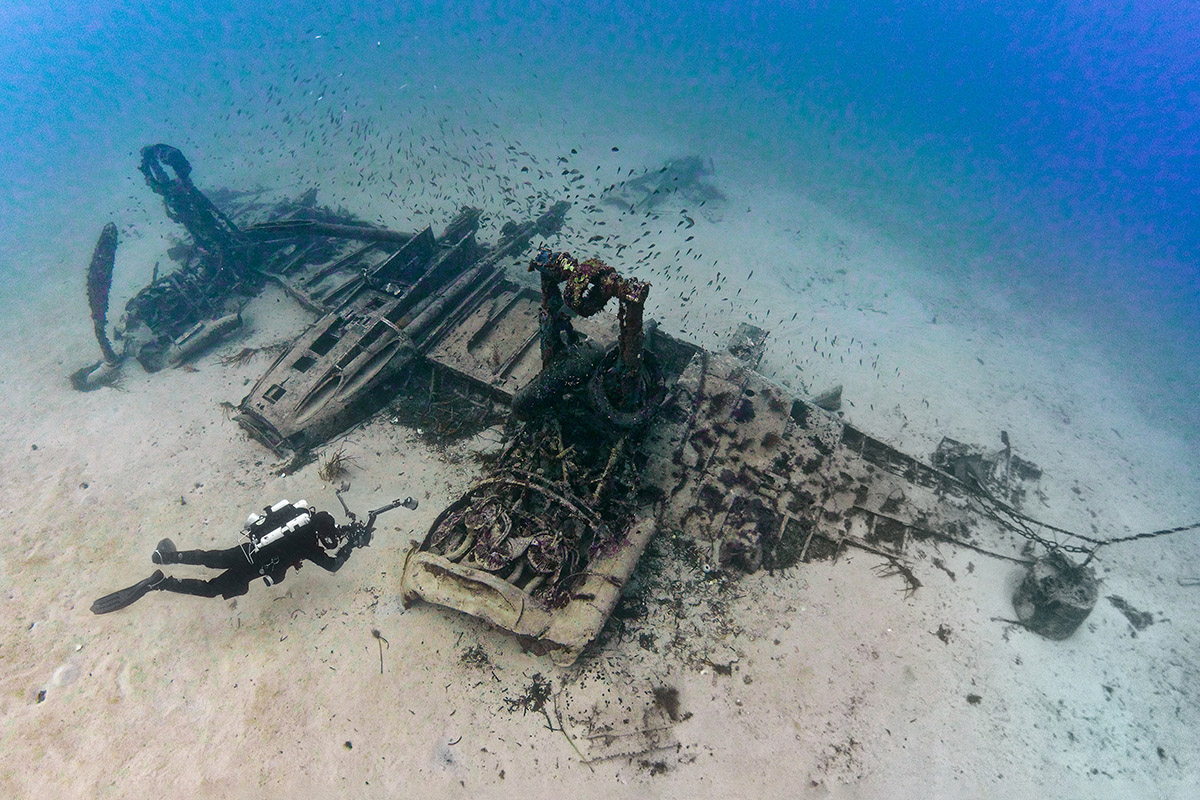
Today what remains of the Beaufighter lies upside down on a clean, white sandy sea bed at a depth of 37m. Accessible only by boat, diving the wreck is nonetheless a relaxed and enjoyable experience. To protect the wreck from badly-placed shots and anchors, a permanent block and line has been placed near the wreck to remove the need for visiting boats to shot the wreck for themselves. This line buoy needs replacing on a regular basis as the wrecks sit in the main path for boat traffic travelling to and from the islands of Gozo and Comino.
Colourful Marine Growth
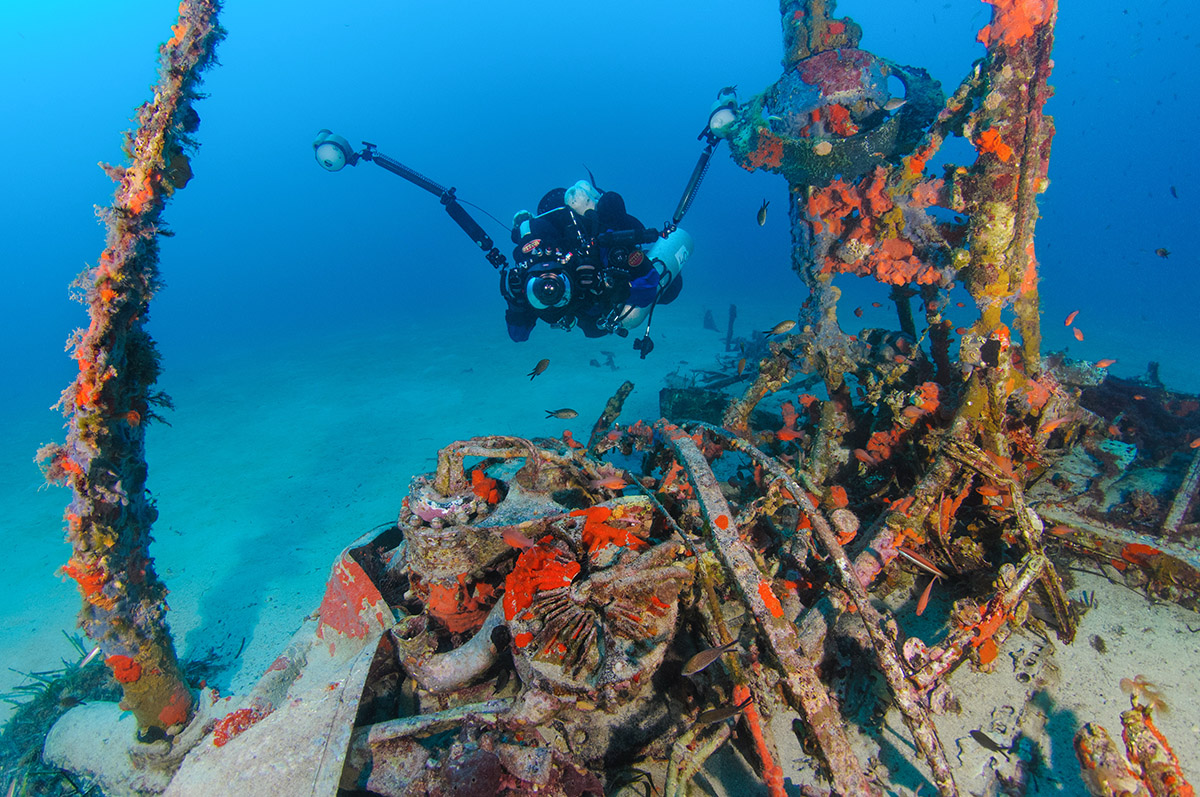
Dropping down the shotline, the outline of the wreck begins to appear through the haze. It’s clear that even after seventy odd years on the sea bed, the lightweight airframe is in surprisingly good condition. Partially buried and laying upside down in the sand, only the tail section of the fuselage is missing from an otherwise complete wreck. Rising up from the wings on either side of the centre fuselage, both undercarriage frames remain locked in the landing position. Covered in colourful marine growth, their shredded and degrading rubber hang limply from their hubs.
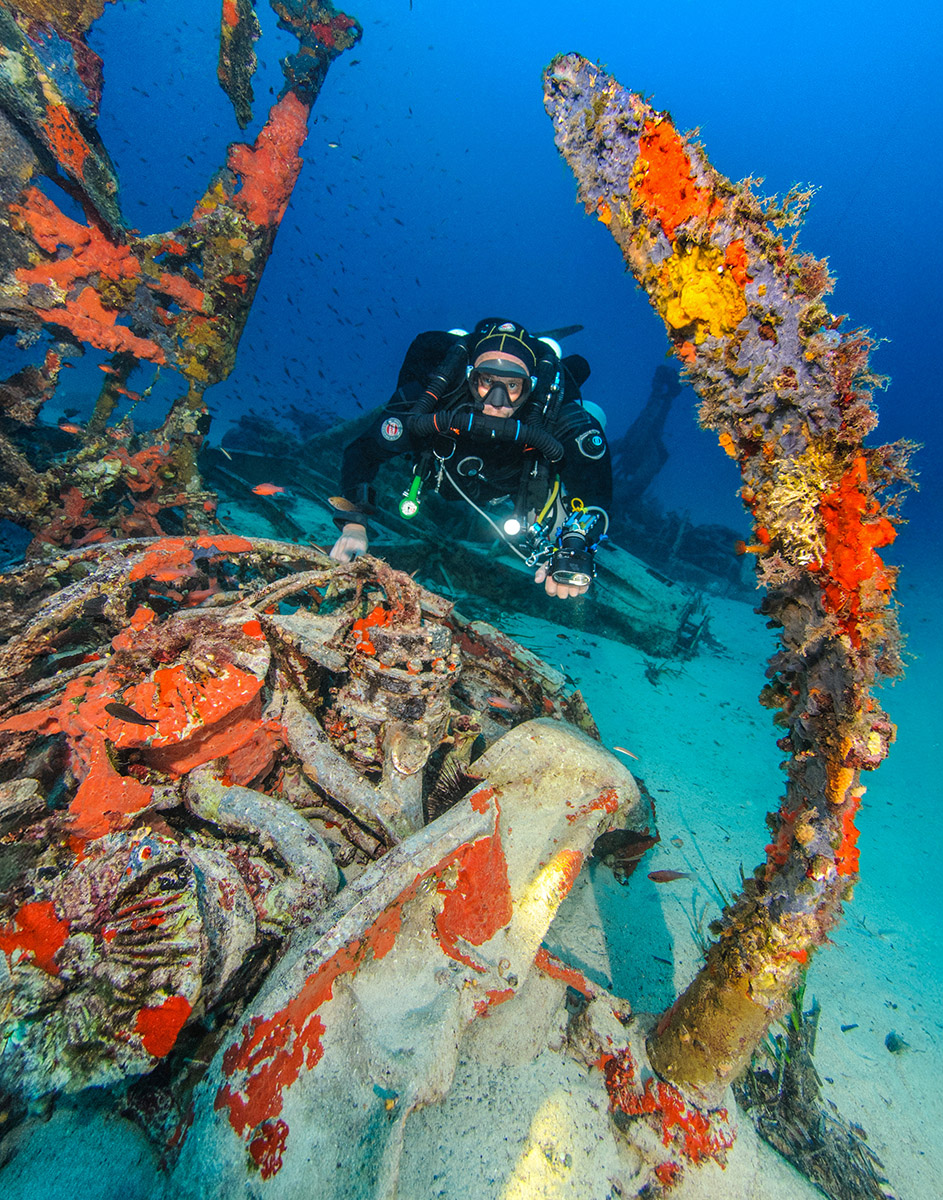
The real attraction are the aircraft’s twin supercharged Hercules engines. Although partially buried in the sand, much of the engine’s workings including its array of radial cylinders can clearly be seen. Like the Blenheim Bomber, the Beaufighter has lost one of its two propellers. Considering the speed at which she must have hit the water, it’s a miracle that either of them stayed in place!
For visiting photographers, no dive on the Beaufighter is complete with at least one shot of the port engine with its twisted propeller particularly buried in the sand. Look out too for the four ports that housed the aircraft’s death-dealing 20mm Hispano cannons, one of which is now bent upwards at a 45 degree angle. These destructive weapons of war now serve as home for a pair of moray eels that have taken up residence around the wreck.




 CONNECT