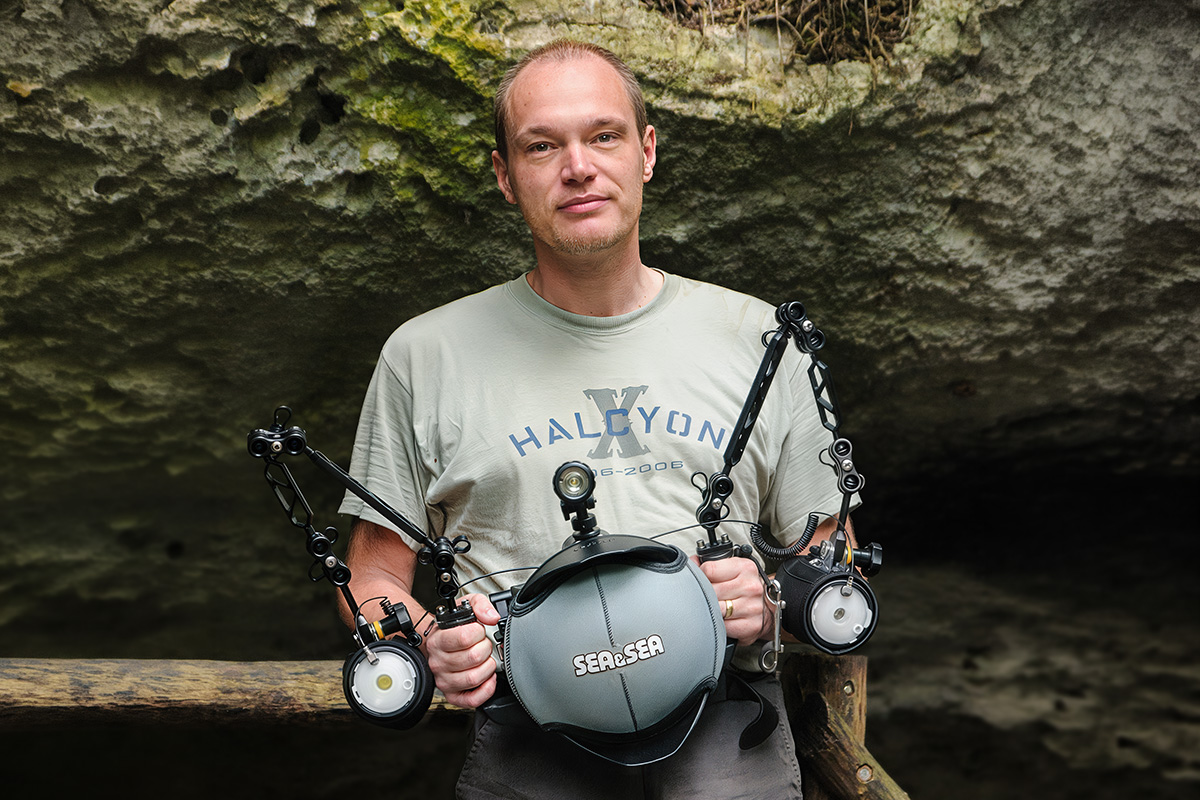
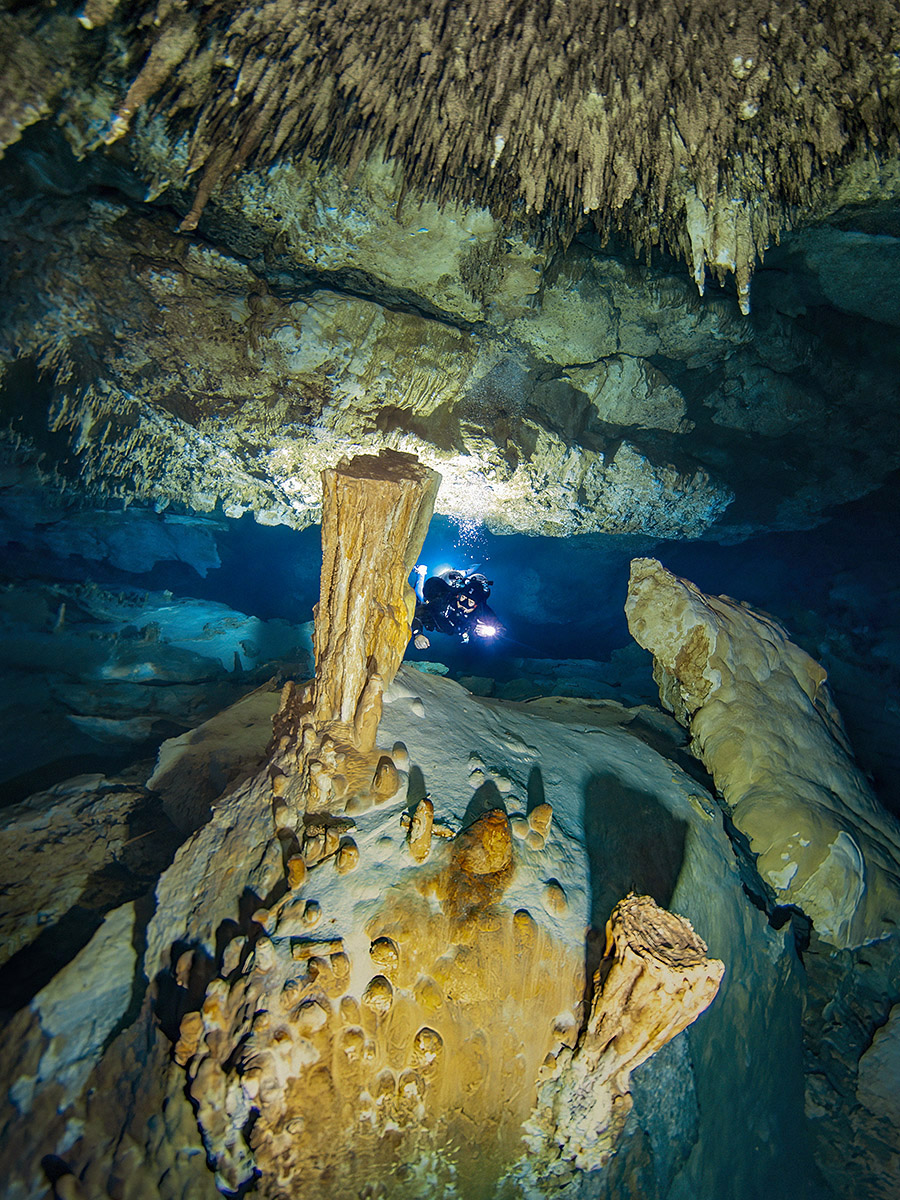
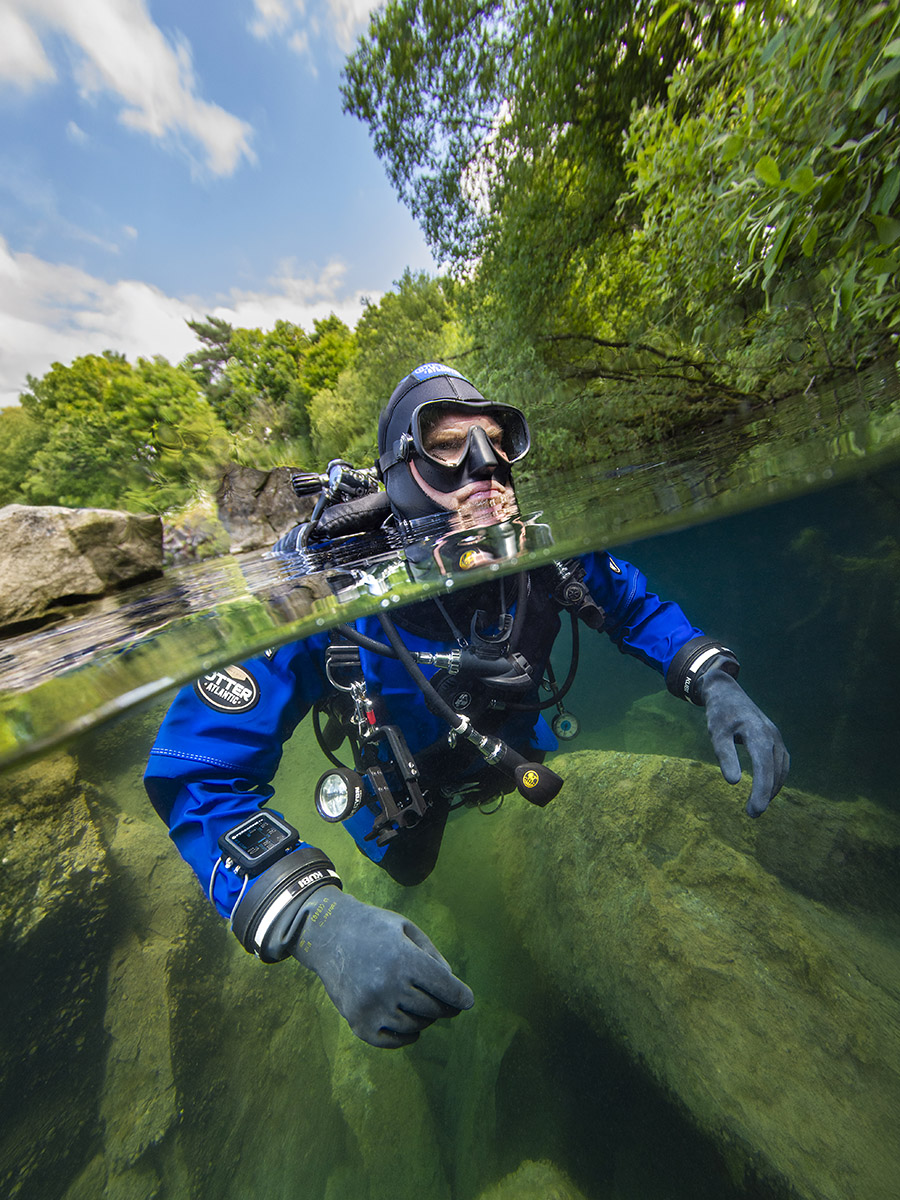
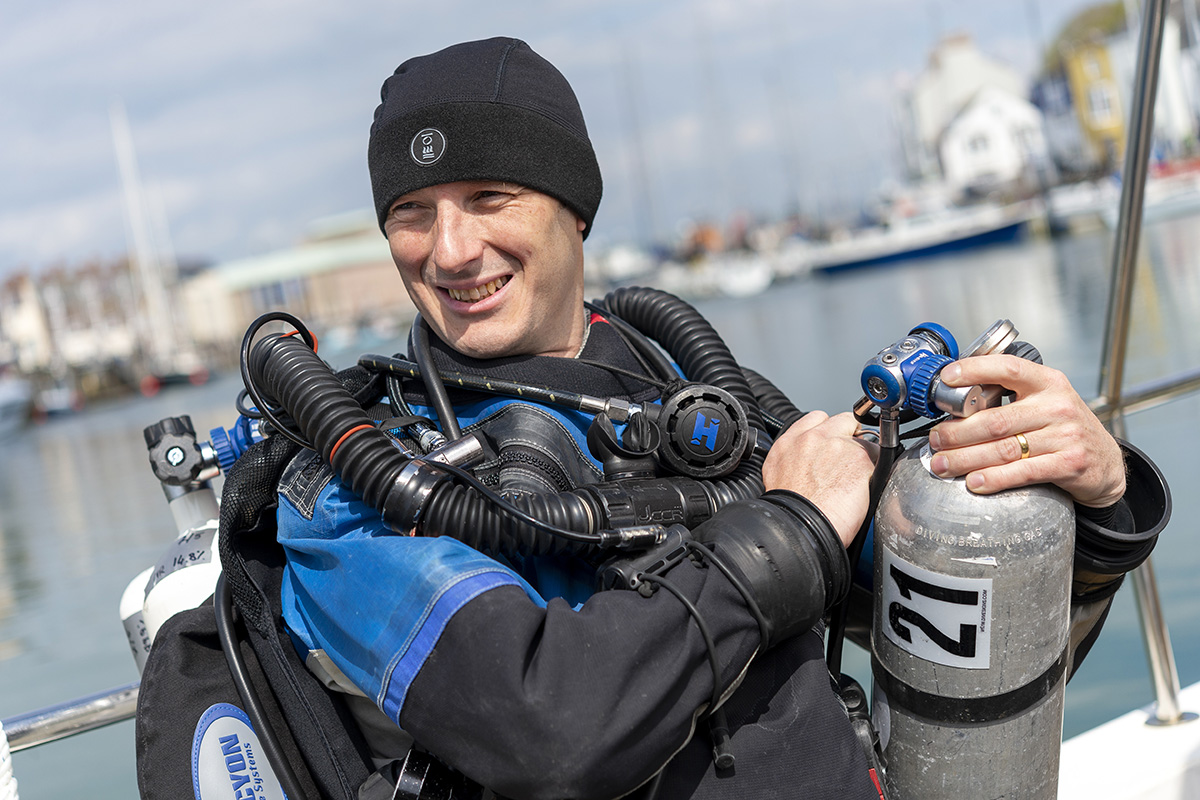
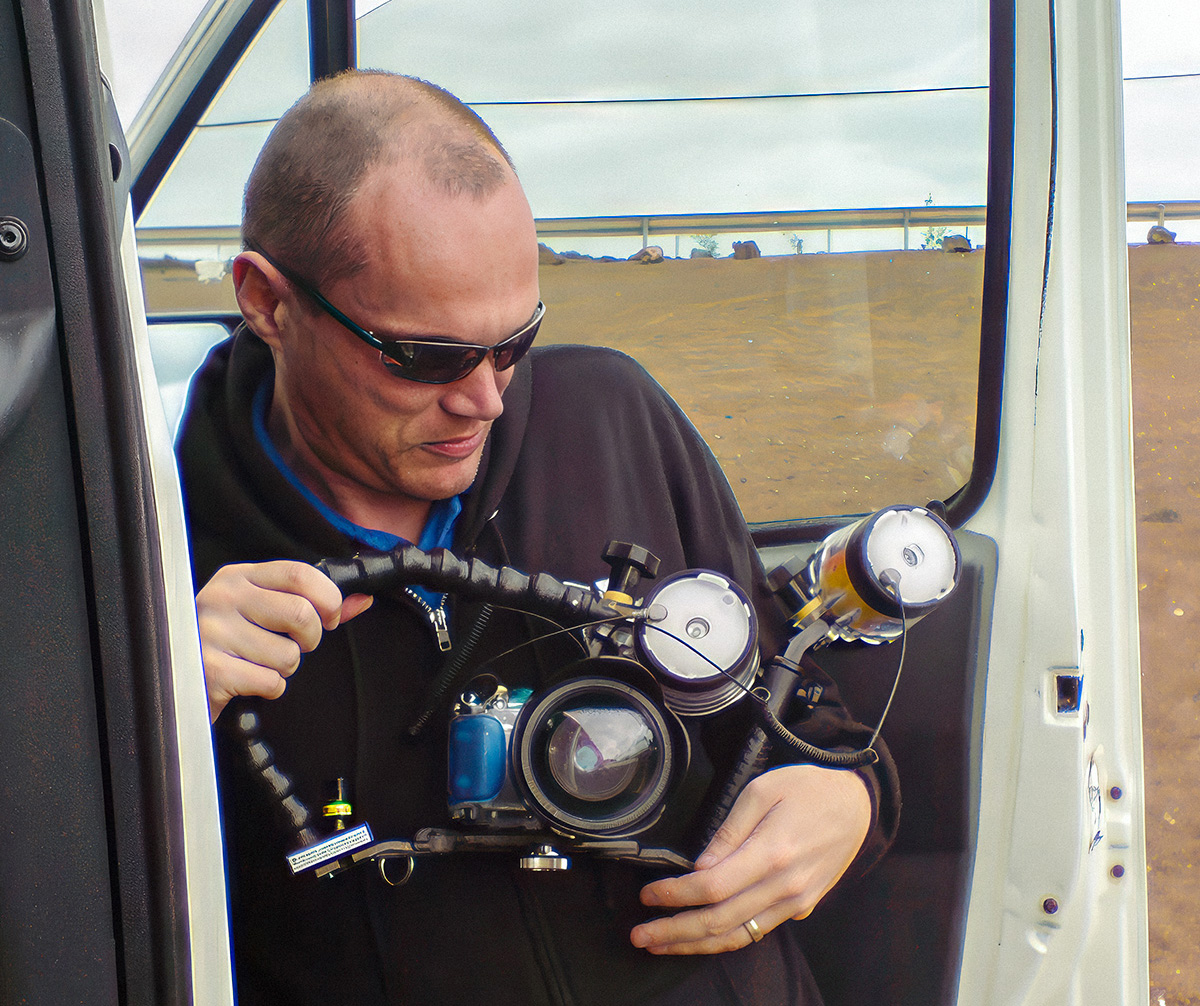
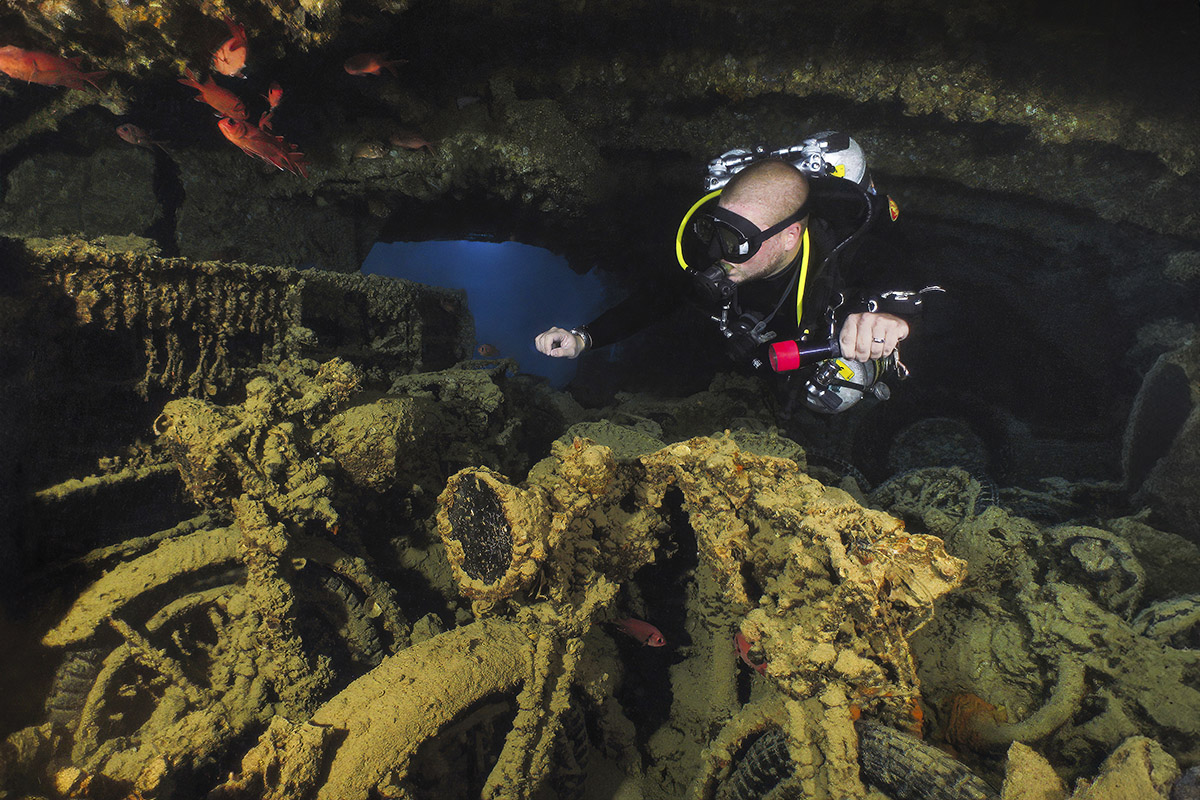
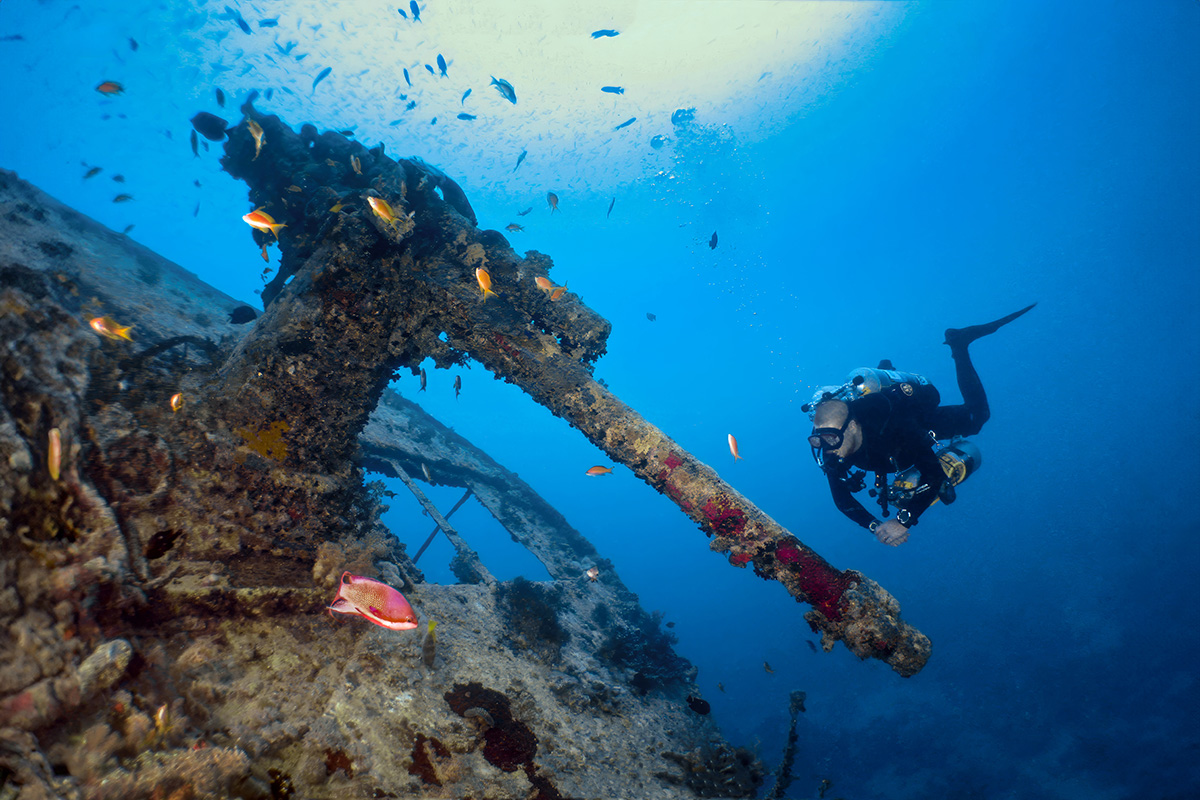
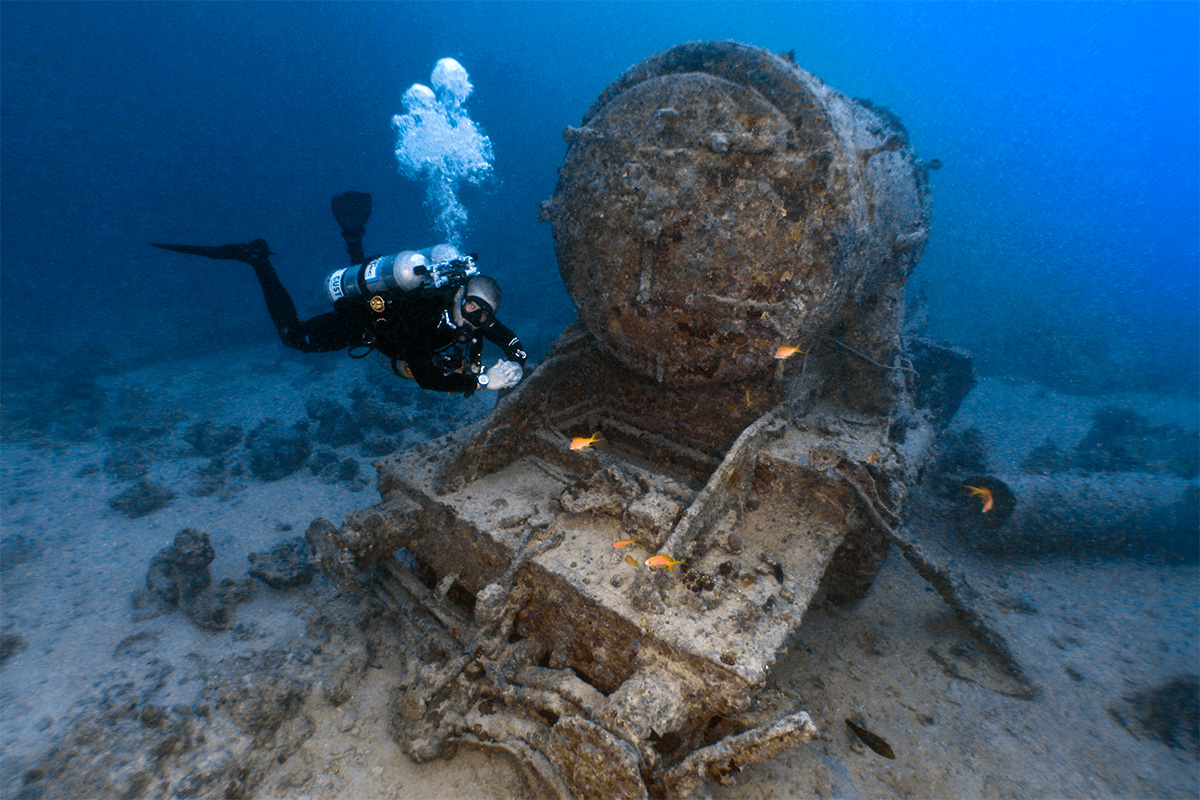
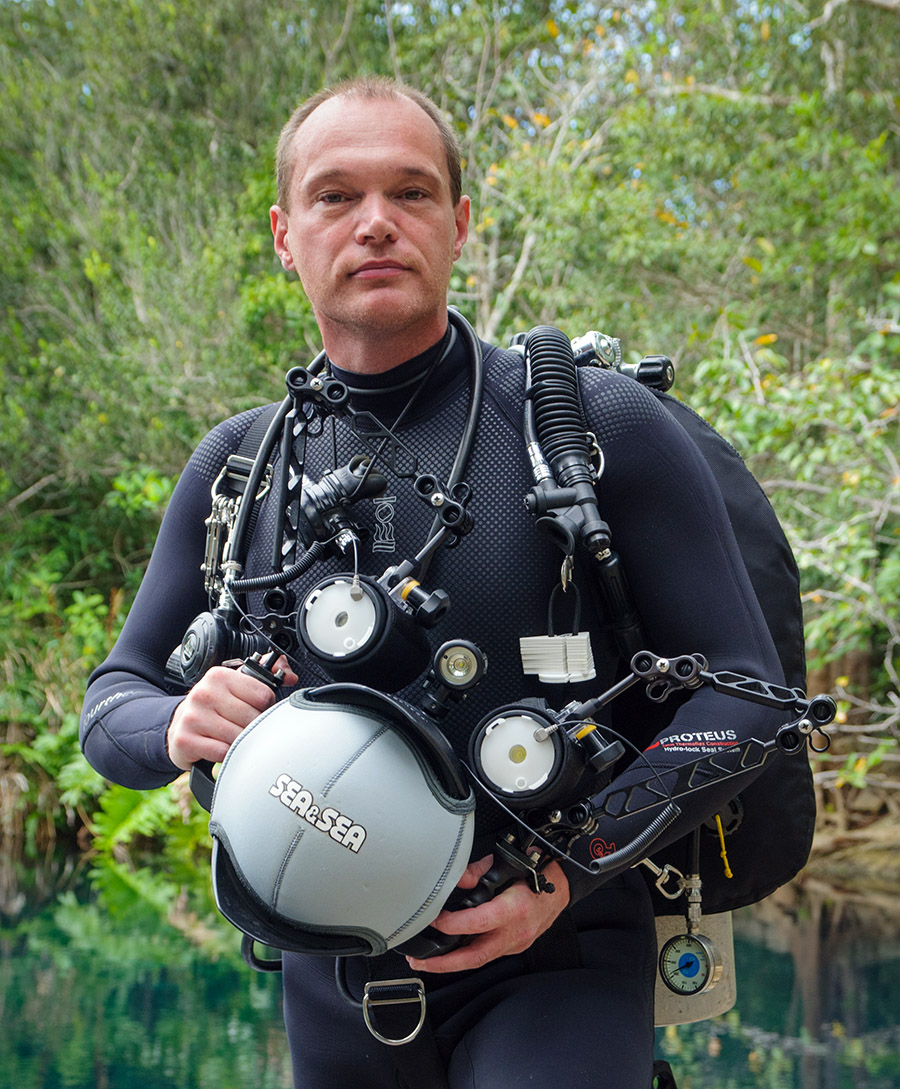
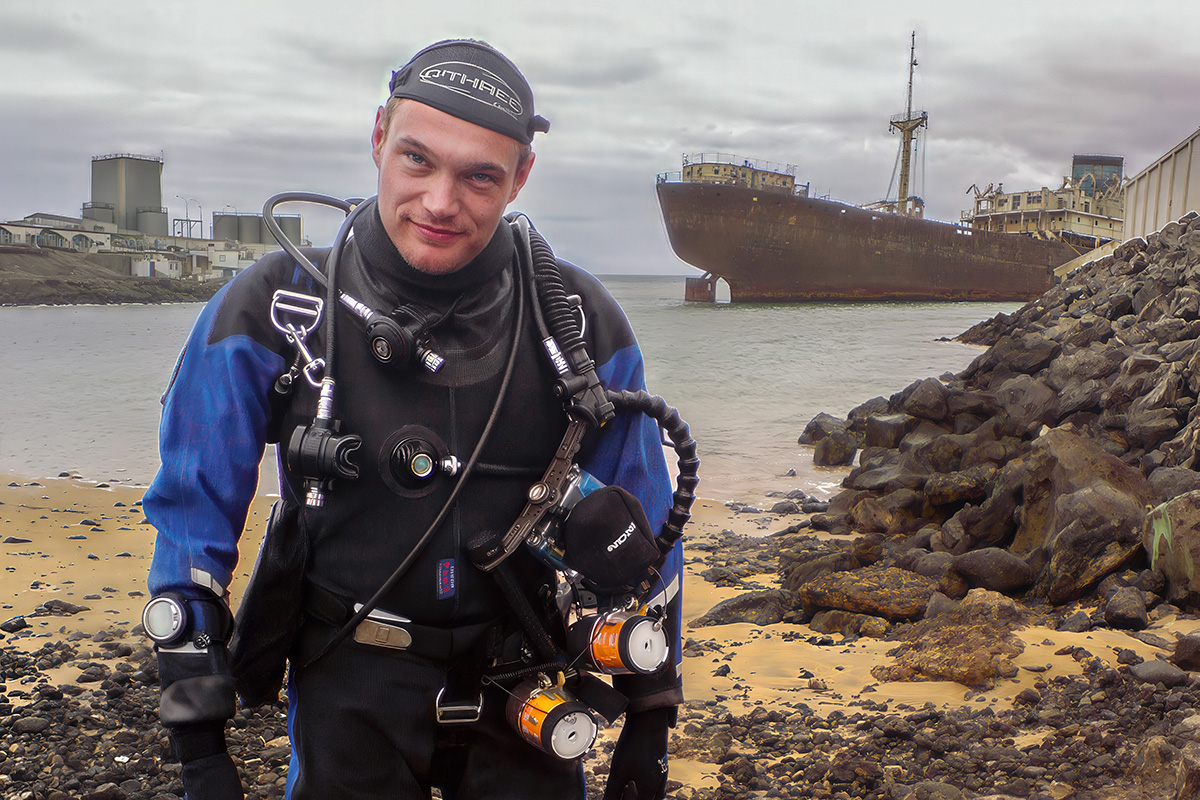
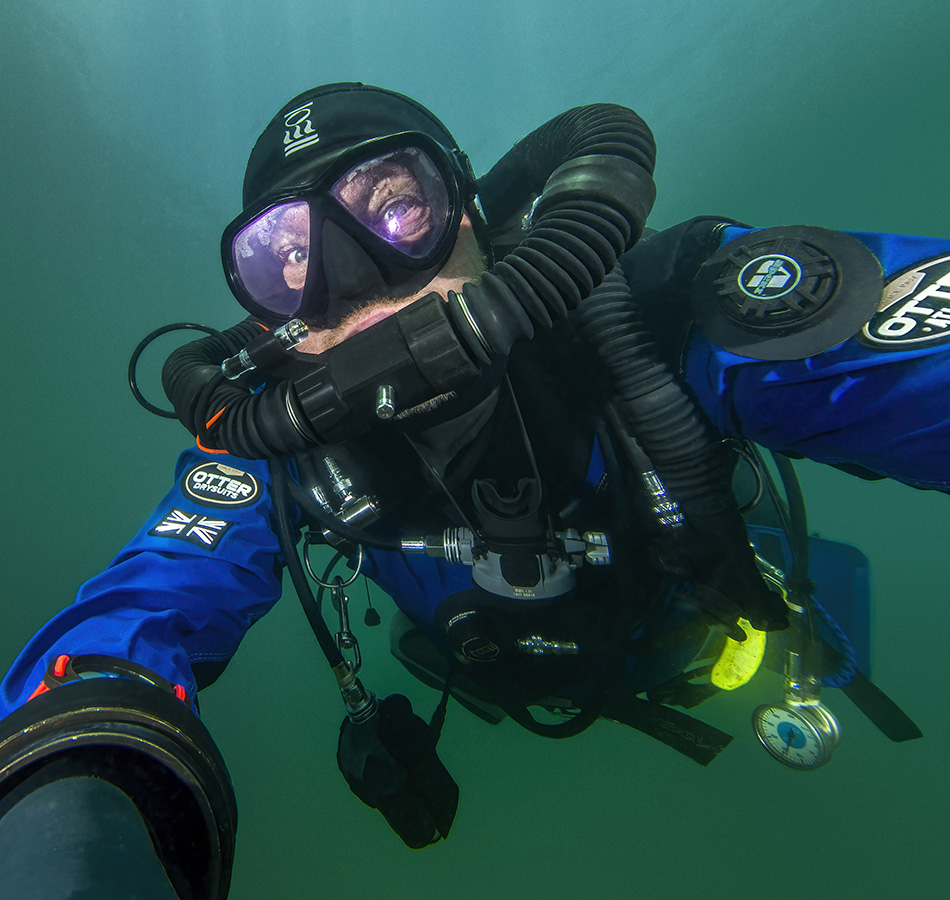
What came first? Photography or diving? Jason Brown takes us on a journey through his life aquatic. From his first camera to what truly inspires him, he charts the milestones and mishaps that shaped his photography.
BARDOPHOTOGRAPHIC
Life through the lens...
What came first? Photography or diving? From my own personal perspective, it’s not an easy question to answer.

Having learnt to dive back in the late 90s, it didn’t take long for me to realise that simply being underwater wasn’t enough – I also wanted to capture what I saw and share it with a wider audience. From the moment I took my first film camera underwater, I was hooked. Photography gave my diving purpose - and provided the spark of creativity and self-expression that still drives me today.

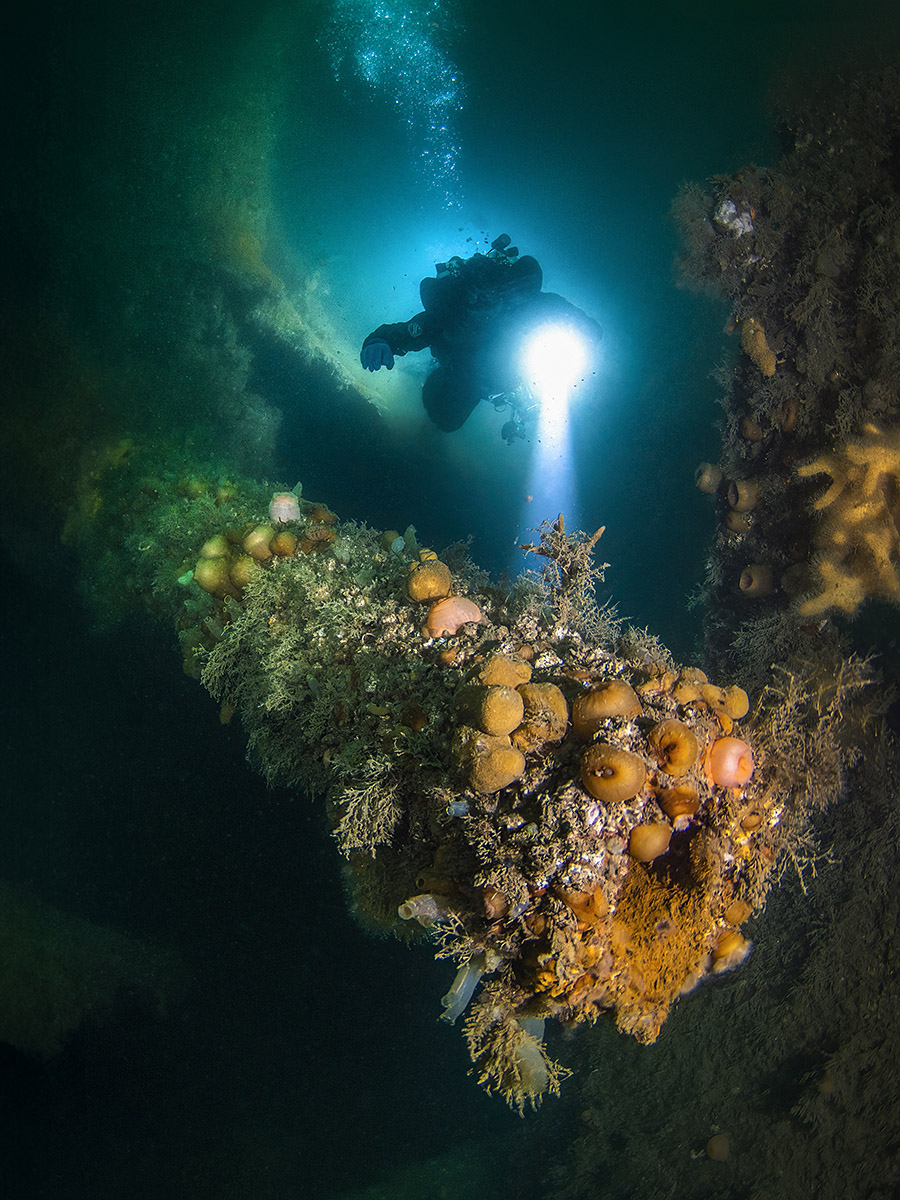
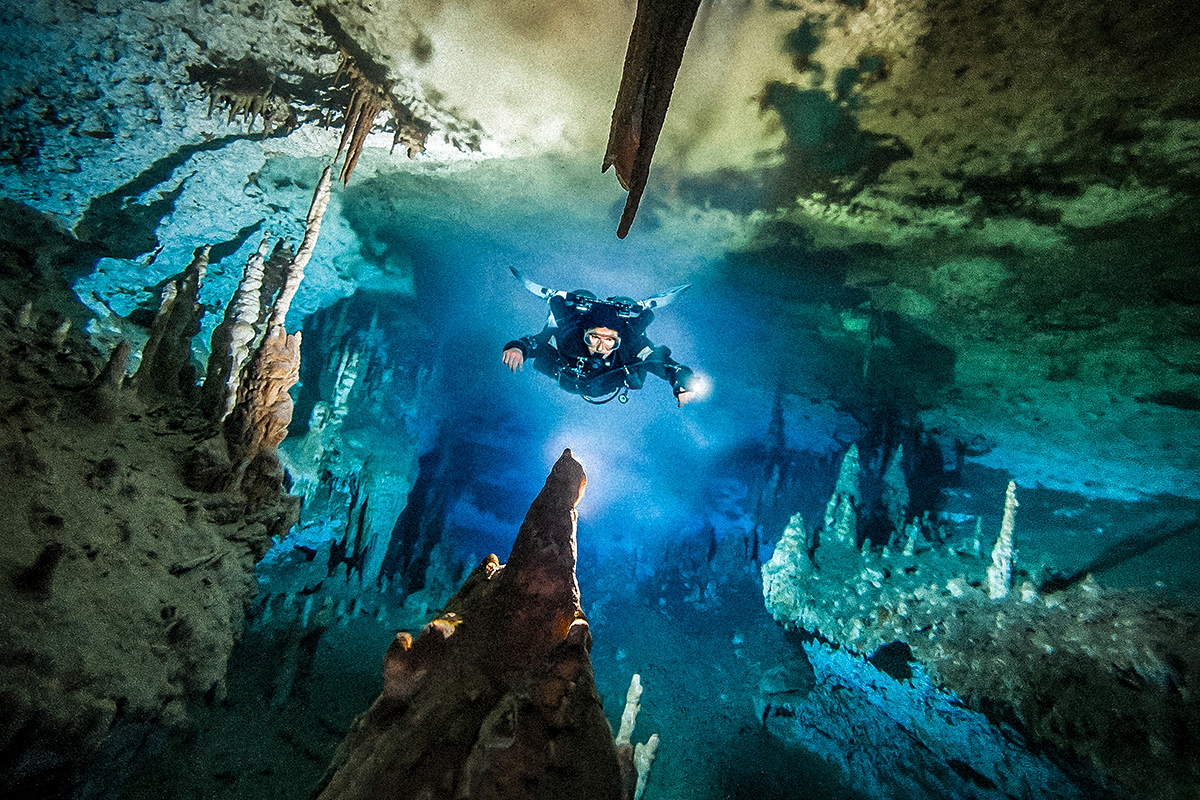
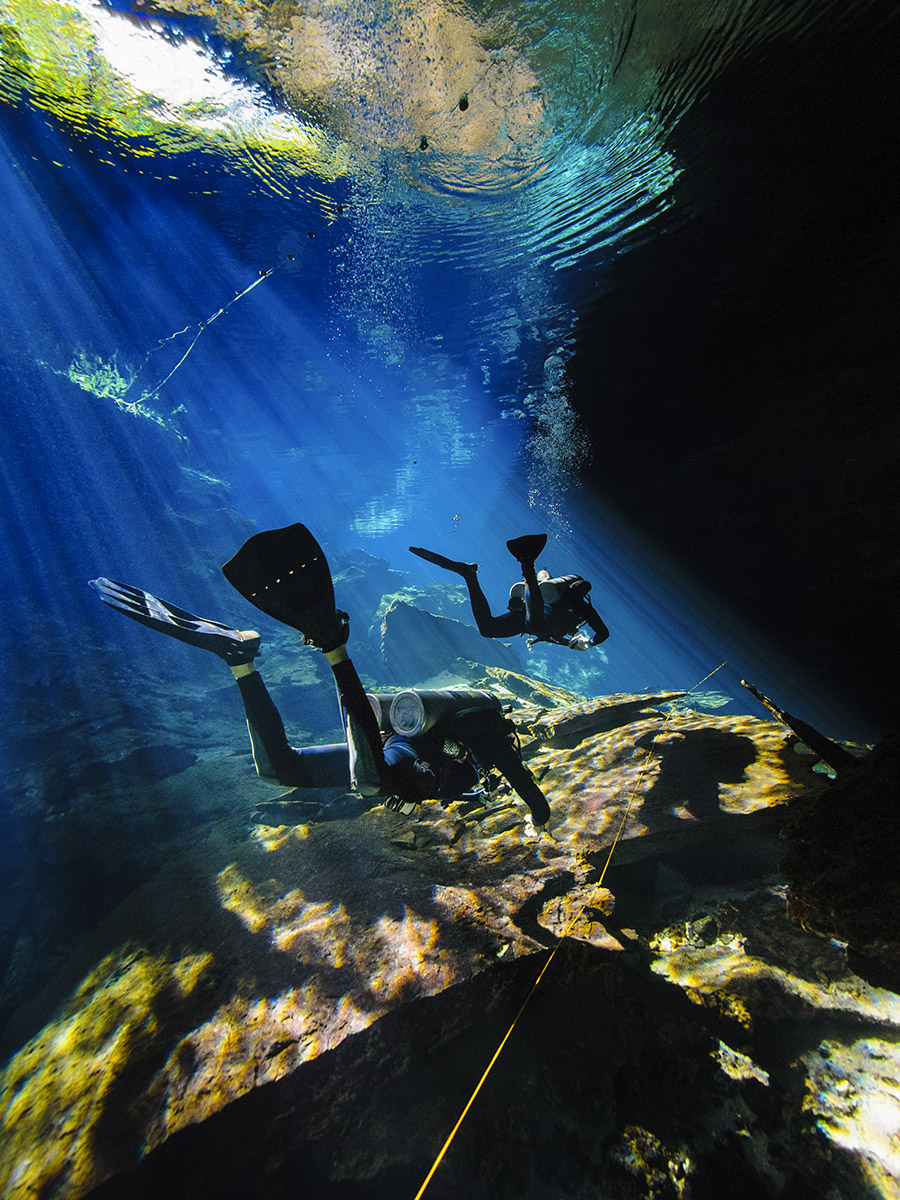
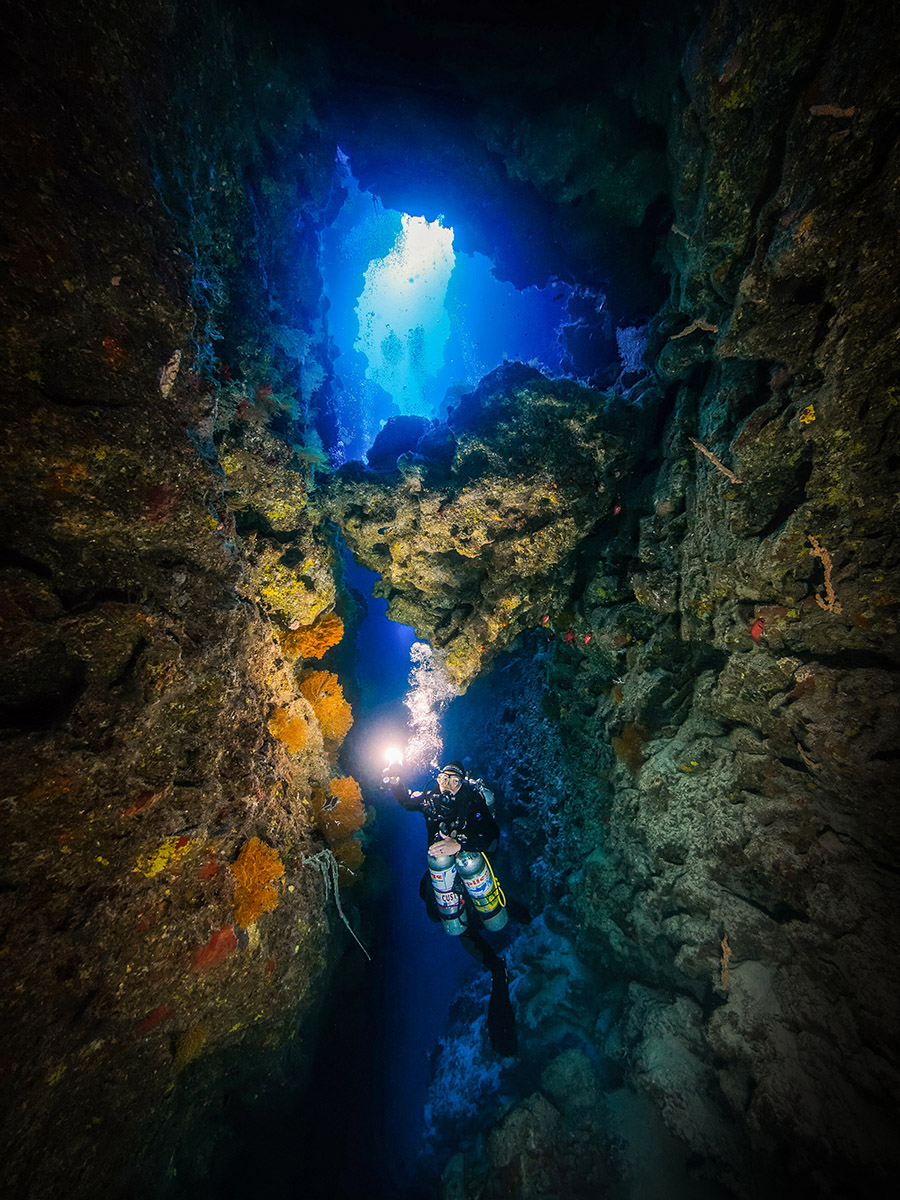
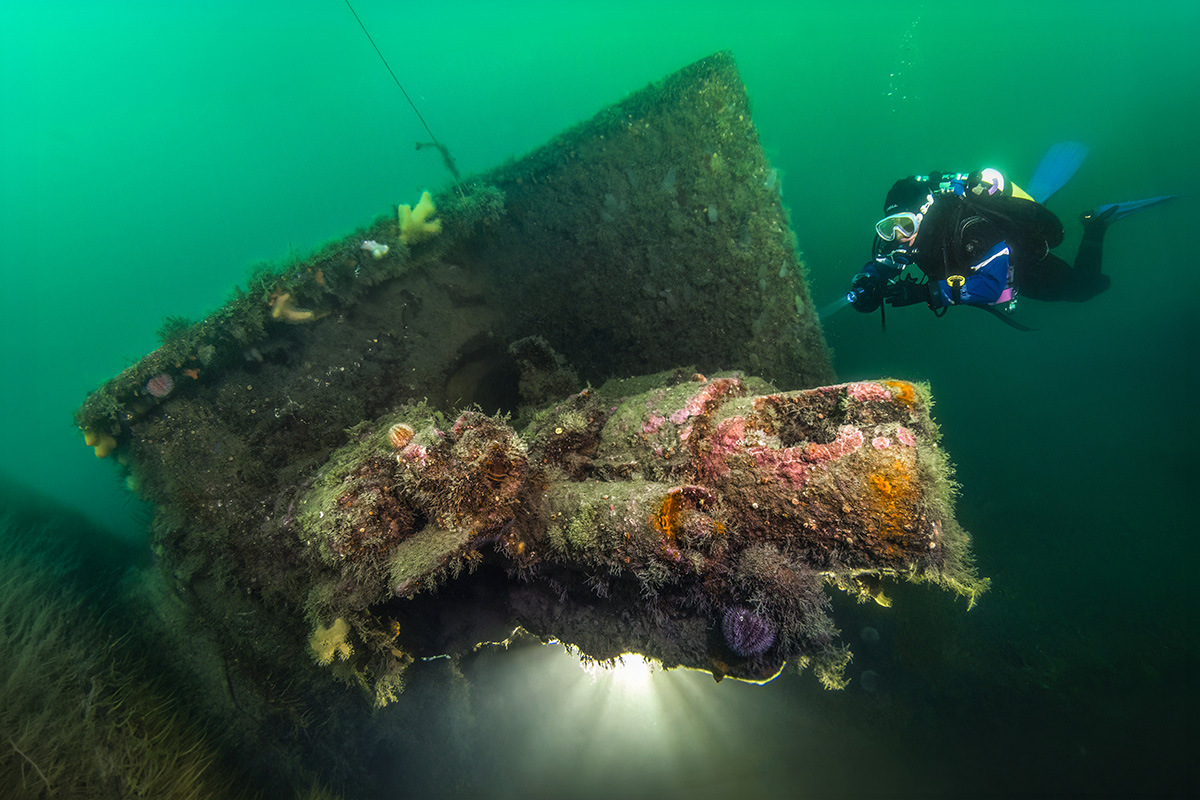
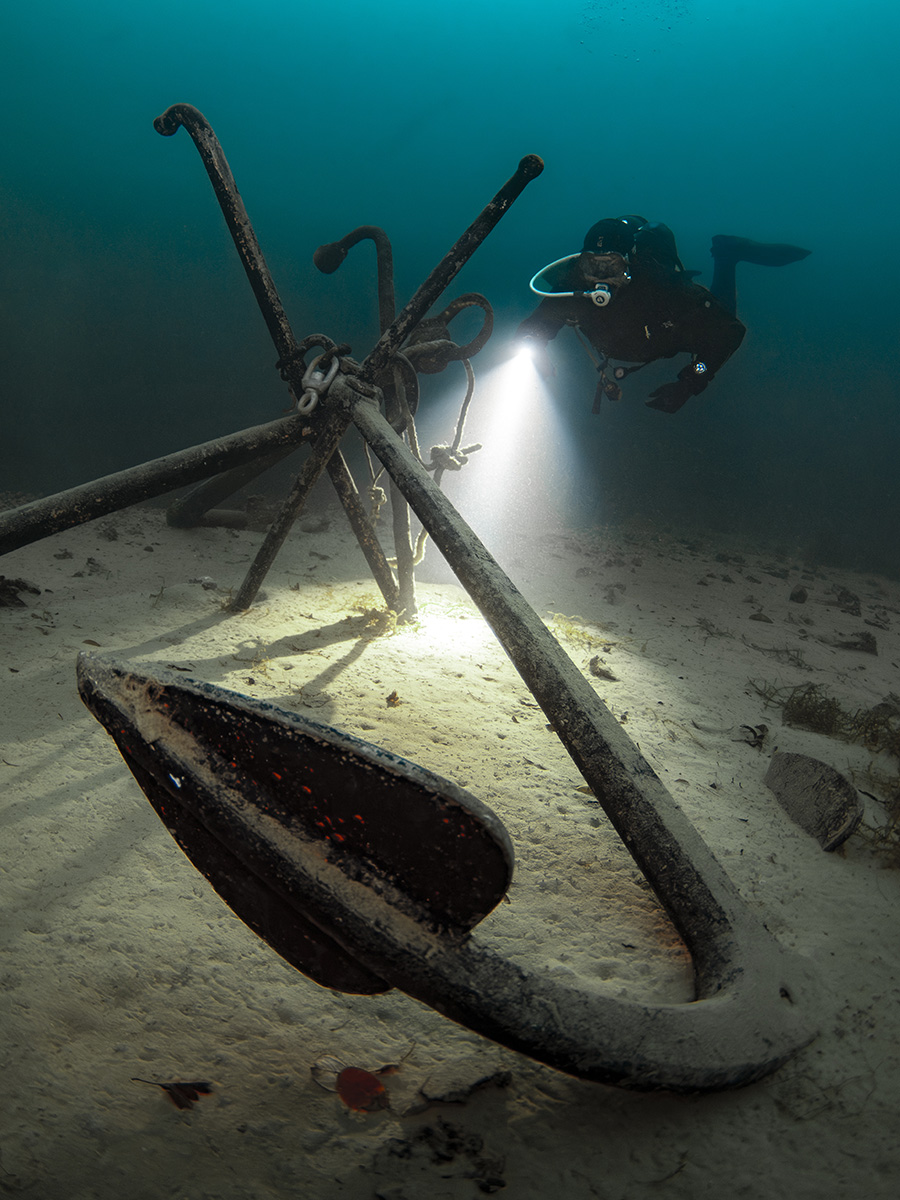
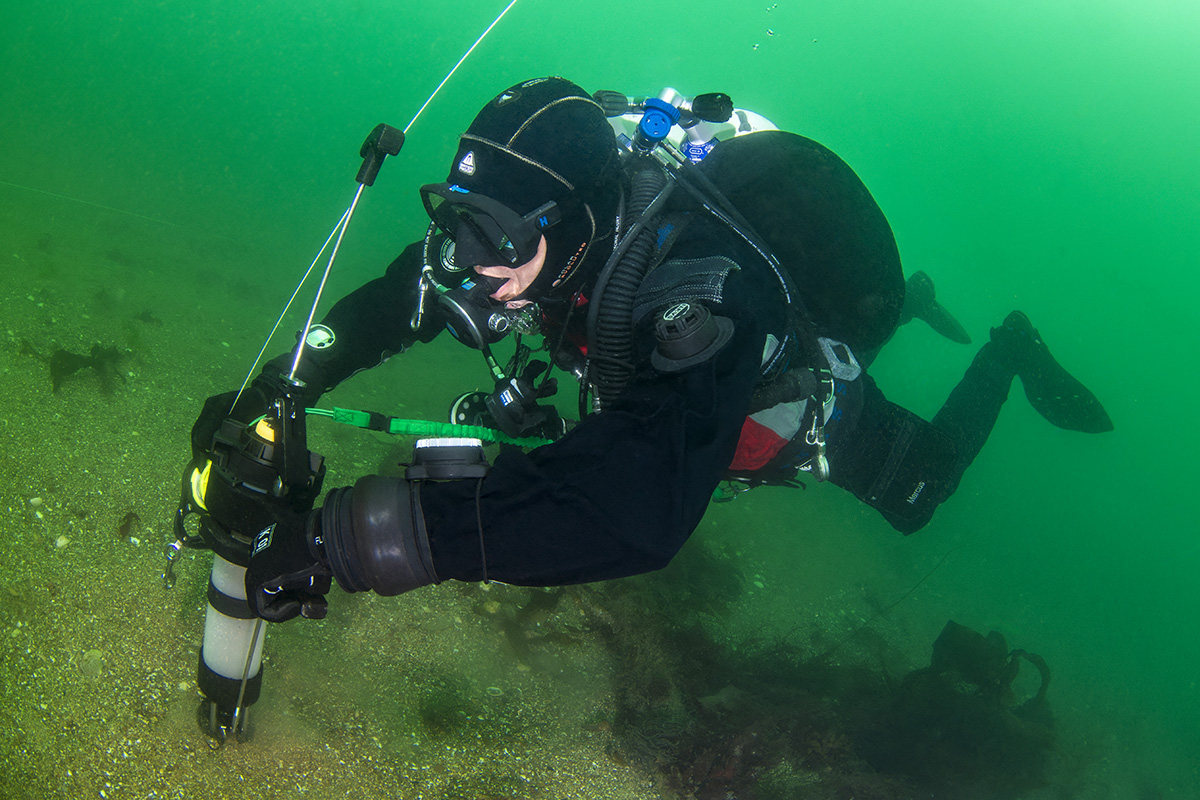
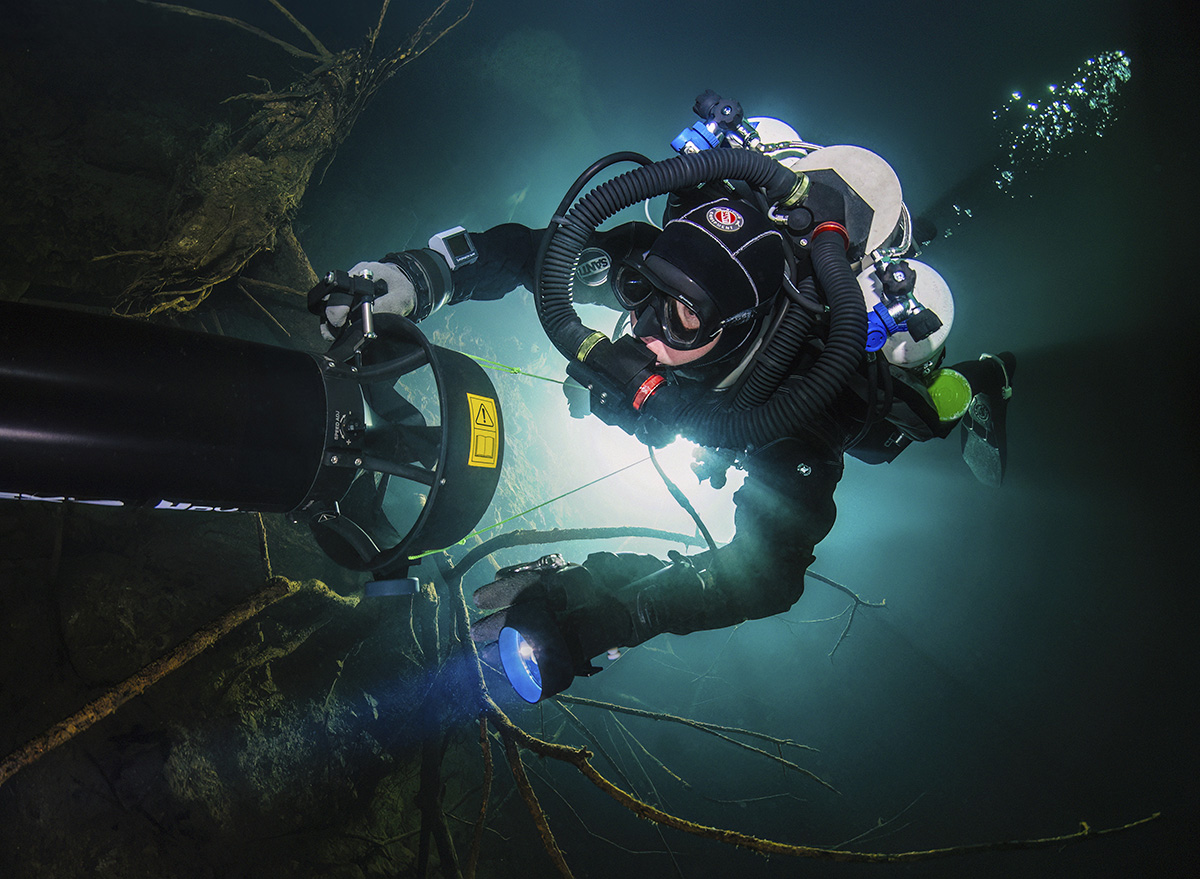
As my diving has developed, so has my technique and photographic style. Technical diving has provided the stable platform that is essential for any underwater photography and has opened up new opportunities to explore my creativity beyond the scope of recreational diving. From deep wrecks to the darkest places deep underground, I strive to capture the mysterious and untamed beauty of the underwater world.
Years Underwater
26+
Dives Conducted
5000+
Deepest Dive
90m
Longest Dive
4 Hrs
Images with Deep Impact
PHOTO LIBRARY
1/250th of a second to capture...
26 years in the making
Everyone has to start somewhere, right? I first learnt to dive back around the turn of the millenium after begrudgingly joining a friend on an open water diving course. Whilst his interest in diving quickly waned, I found my passion.

I gave my foundational diving skills time to embed before I made the jump into underwater photography. It's something that I passionately advocate when new divers seek my advice - cameras and diving should only be mixed once you've mastered the basics of diving. Buoyancy control and in-water awareness are as important as understanding your camera if you want to capture eye-catching images without destroying the very environment you're championing through your photography.
Key Information
Author:
Jason Brown
Publication Date:
April 2026
Feature catagory:
Photography

This feature and all images are copyright © Jason Brown and may not be republished, reproduced or copied in any form without the express written permission of the author. This feature and all images are available to licence.
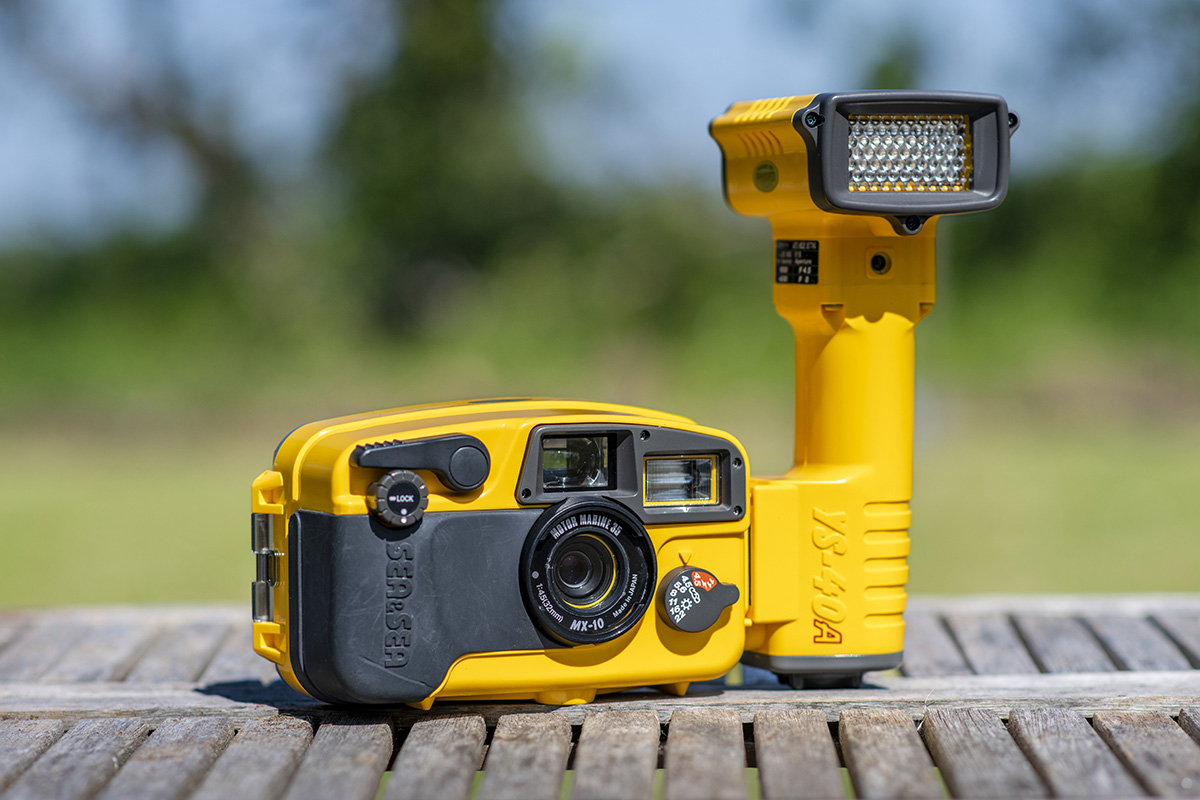
It didn't take long for the need to take a camera underwater finally got the better of me and I took the plunge (so to speak) with the purchase of my very first dedicated underwater camera - a Sea&Sea MX-10. Back then there was no such thing as digital - the MX-10 was a pretty basic 'point and shoot' film camera that lacked full manual controls. Although you could adjust the aperature, the camera was was fixed focus and even the shutter speed was fixed at 1/100th of a second.

Another thing that was fixed was the strobe bundled with it. Designed specifically to work with the MX10 camera, it connected directly to the side of the camera via a locking mount that also incorporated the triggering mechanism - a clever built in optical sensor. The strobe only had two settings - full power and auto. With the camera set at f/4.6 for ISO100 film or f/8.0 for ISO400, it produced surprisingly good results in clear water conditions. Where it didn't fare to well sadly, was in UK waters - the position of the strobe was far too close to the lens, often resulting in backscatter. Despite the shortcomings of the MX10 system, I got some surprisingly decent results from it.

Journey into full manual...
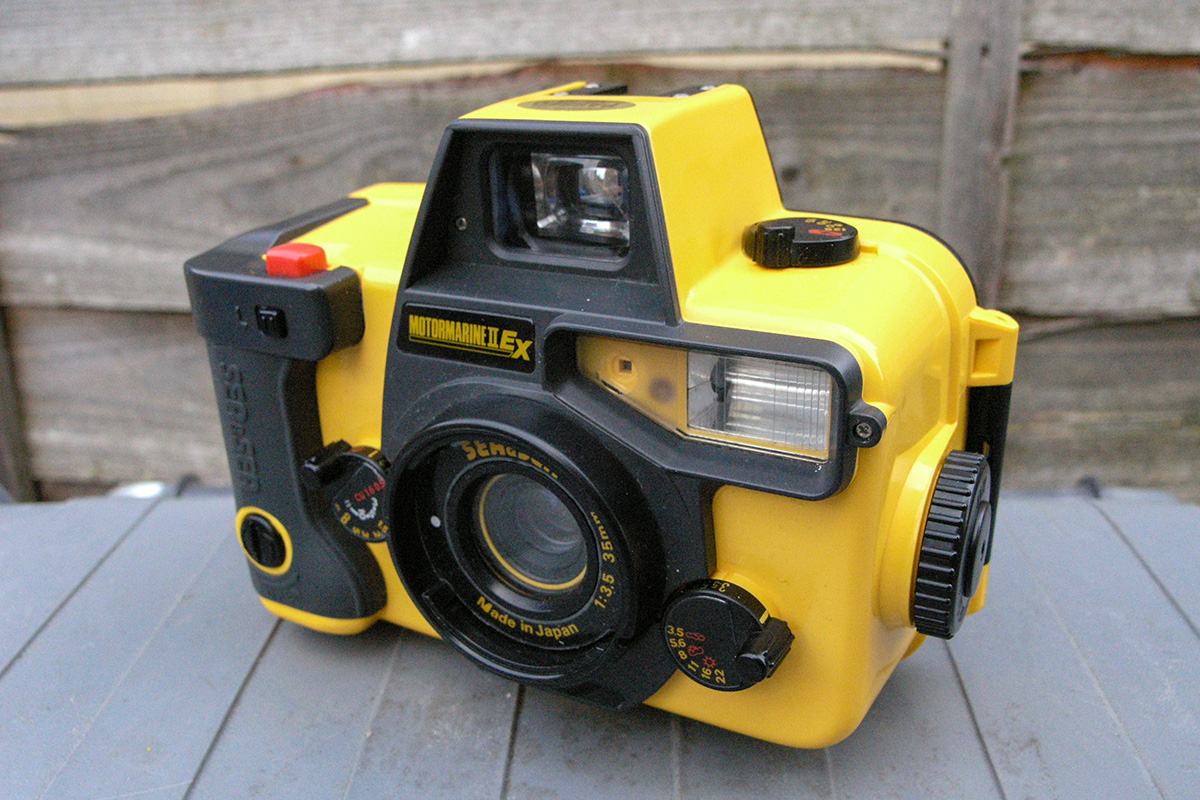
It didn't take long for the MX10's many shortcomings to prove too limiting so I very quickly made the jump to something (then) far more sophisticated - a Sea&Sea Motormarine II-EX. Again, I went for the bundle deal which included the camera plus a YS-60S strobe, tray and adjustable arm. The whole rig certainly felt a bit more 'professional' but it still had its problems. Whilst it did offer manual adjustments via separate control dials for aperture, focus and shutter speed, the maximum shutter speed was restricted to just 1/125th of a second. This would often cause over exposure issues in shallow water/bright sunlight conditions, especially if you didn't have the right speed of film loaded. The adjustable focus was a big step up over the MX10 but it had to be dialed in manually using a dial on the front of the camera.

Our time together would prove to be short-lived as the Motormarine II-EX would later introduce me to something every underwater photographer dreads - a full camera flood. During a trip to the Red Sea in 2004, I merrily jumped off the back of the liveaboard vessel one evening for what I had hoped would be a most memorable night dive. Sadly it proved to be memorable for all the wrong reasons. As I started my descent, I noticed a stream of bubbles coming from my camera and quickly headed for the surface. Back on the boat I opened the back of the camera only to be covered in a black sludge that poured fourth from the inside of the camera. A result of the film loaded into the camera reacting to the ingress of salt water, things did not look good. Sure enough, my poor Motormarine II-EX was no more. RIP my Motormarine II-EX - it was now an ex-camera.
"You never really knew how your images would turn out until you got your film developed - the wait was torture and the disappointment of poor results only compounded the pain."
The experience of losing an expensive camera underwater made me far more reluctant to invest in a replacement and I would spend the next couple of years developing my photography habit using camera systems belonging to a friend. It's safe to say that I owe him a debt of gratitude for keeping my interest in underwater photography alive during those early years. Without access to his cameras, I'm not sure whether I would have continued.

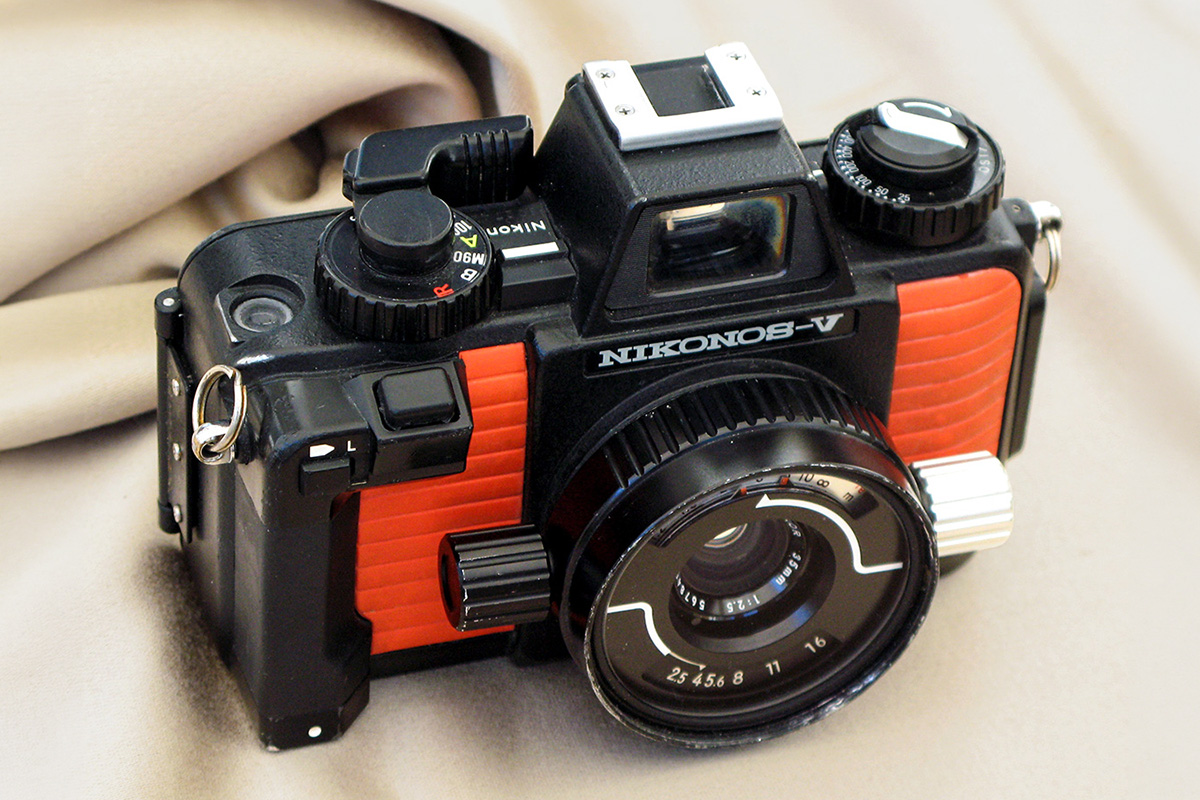
The first of his cameras that I played with was a Nikonos V (or 'Nik 5' as it was effectionately referred to back then) with a 20mm wide angle lens and YS-120 strobe. I loved the Nikonos V - it was everything the Motormarine II-EX wasn't. Free of the limitations that so restricted the Motormarine II-EX, it gave me my first taste of using a 'real' camera underwater. Even today, I have a real soft spot for the Nikonos V. I keep telling myself that one day I'll get one just to relive those early days of my photographic journey.

Finally... a real camera!
The camera that *really* got my creative juices flowing, though, was a Nikon F90x fitted with a 16mm full frame fisheye lens. Sealed within a Sea&Sea NX-90 underwater housing, this camera combination produced images that were miles ahead of anything I'd shot before. It also delivered something that finally unlocked the control I needed to capture images of professional quality - full manual control. With aperture adjustment between f/2.8 and f/22 and a maximum shutter speed of 1/8000th of a second, the combination of the Nikon F90x was a game changer.

Nothing is perfect and shooting film came with its challenges. Unlike the digital cameras were use today, there was no realtime preview of your shots. An incorrectly positioned strobe could so easily result in too much backscatter or an under exposed or blown out image. You never really knew how your images would turn out until you got your film developed - the wait was torture and often the disappointment of poor results only compounded the pain. Even with these shortcomings, the lessons I learnt cutting my teeth with this full-featured professional camera system would prove particularly useful when I finally made the jump to full digital.
The jump to digital...
My first foray into digital started with a relatively humble system - a digital compact in a waterproof plastic housing. Although very limited in today's terms, the digital compact provided a good way of testing the waters before making the jump to something more professional. Digital cameras were still in their infancy back then and the technology was pretty rudimentary - the Canon IXUS camera I used only had a six megapixel sensor and ISO performance was woeful but I got some good results from it.

I added a few bells and whistles to make it a bit more capable than a stock compact camera. The most useful gadget I added was an Inon UFL-165AD 'wet' lens which attached to the front port of the camera housing via a bayonet adaptor. This clever piece of glass extended the camera's limited field of view to a whopping 165 degrees which made it far more suitable for shooting large subjects underwater. To supplement this, I added a pair of Sea&Sea YS-110 alpha strobes triggered via an optical cable attached to the camera via a plate and arm system liberated from the long-dead remains of my old Motormarine II-EX. Getting the IXUS to sync with a strobe wasn't easy and involved using the camera's 'exposure lock' function to fool it into bypassing its own exposure metering. It worked but was far from the full manual control I rely upon these days.

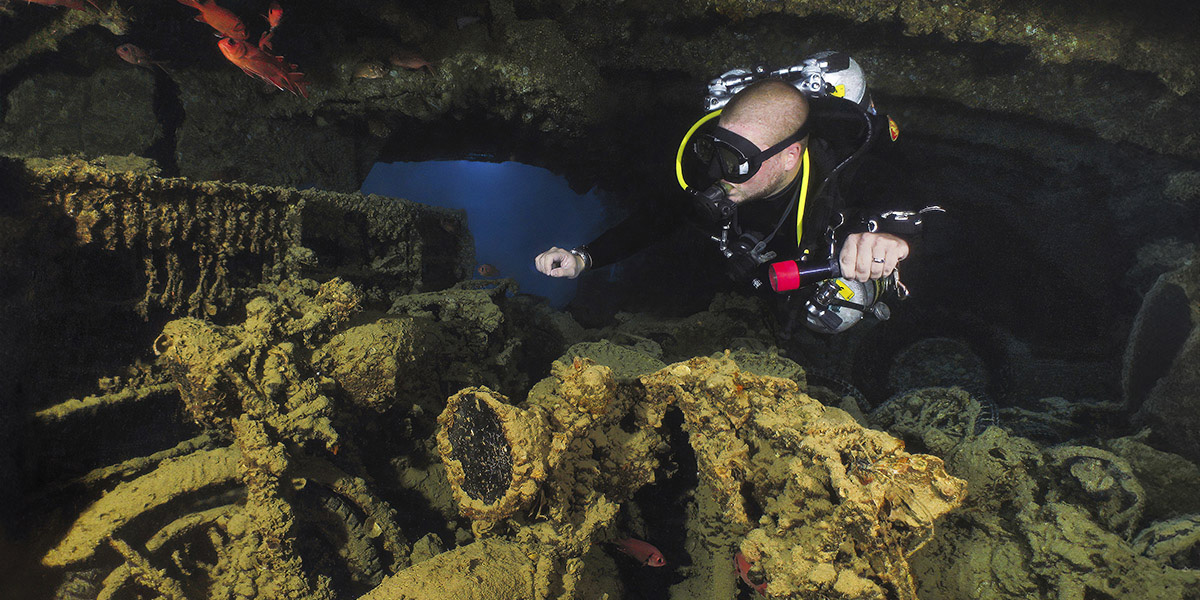
With the addition of a strobe and the ancillary wide angle lens, my little compact camera system produced some surprisingly good results. Some of the best images I ever got out of it were shot on the Thistlegorm wreck in Egypt - you can see a small selection of those images below.

The IXUS had its own unique limitations. Perhaps most significantly, the Inon fisheye lens really compromised the image quality to achieve the fisheye effect. Corner sharpness was very poor and it suffered terribly from chromatic aberration, lens flare and internal reflection halos in sunny conditions. Despite these limitations, my experiences with the compact digital system inspired me to take things further - digital was clearly the future.
My first 'pro' digital system...
The jump to professional digital finally happened in 2010 with the purchase of a Nikon D300 digital camera and housing. The Nikon D300 may be a bit of a dinosaur compared to the digital cameras we have today but back then, it was state of the art. Featuring a 12.3 megapixel CMOS sensor with an ISO range of 200-3200 (expandable to 6400 but really not recommended), it was a big jump up from film. Paired with an MDX-300 Sea&Sea housing, a Nikon 10.5mm DX fisheye lens and a pair of Sea&Sea YS-110 alpha strobes, I was in digital heaven! Macro never really interested me - wide angle was always where the fun was!

Like the Nikon F90x, the Nikon D300 offered full manual control but with the benefit of a real time preview each time you took a shot. With a high resolution 3.0" LCD screen on the back of the camera that I could see through a window in the back of my camera housing, I could finally see what I was shooting. It became so much easier to avoid the mistakes that had plagued my film shooting - school boy errors like incorrect strobe placement were suddenly a thing of the past. The maximum number of exposures you could shoot was no longer an issue either - instead of just 36 exposures, I was limited only by the size of my camera's memory card!

Of course shooting digital with a camera like the Nikon D300 delivered something even more seismic - the ability to shoot in RAW and edit images in post-production tools like Adobe's Lightroom. It's impossible to overstate just how much of an impact this had on the quality of my images. I could finally leverage the power of digital to create the images I so wanted. Even at a basic level, a full digital workflow offered far more adjustment power than working with scanned transparencies ever could. Working with digital RAW files unlocked far greater control over stuff like white balance, shadows and highlights.
"Based on the same 'firefly' sensors pioneered by dry cavers, remote triggers use a light sensor that monitors the darkness for the sudden peak in light levels created by a flash from your camera's own strobes."
The next big jump in my photography life would occur thanks to a chance encounter with Canadian image maker Jill Heinerth at the EUROTEK Advanced Diving Conference in Birmingham back in 2010. Despite working the event, I'd allowed myself to escape the booth for one talk. Choosing which talk to sit in on was tricky as EUROTEK always featured a stellar line up of speakers but Jill's talk on underwater photography caught my eye. For the next hour, Jill waxed lyrical about her own photography but things took a real turn when she moved onto the subject of cave photography. I'd never really considered taking a camera into a cave but listening to Jill's talk really piqued my interest.

Off-camera lighting...
What particularly fascinated me was Jill's use of off-camera lighting to bring shape and form to an environment devoid of light. Inspired by what I'd seen, I decided that cave photography was something that I too wanted to explore.

Shortly after EUROTEK, I invested in the kit I'd need to trigger strobes remotely. Based on the same 'firefly' sensors pioneered by dry cavers, remote triggers use a light sensor that patiently monitors the darkness for the sudden peak in light level created by a flash from your camera's own strobes. Upon detecting a flash, they trigger the strobe they're connected to. It all happens instantaneously with zero delay. All very clever stuff.

These days, of course, using strobes for off-camera lighting has fallen out of fashion thanks to the availability of high-powered LED lights. Whilst strobes still produce more light than even the most powerful LED light, it's easy to see why so many photographers now prefer LED. Positioning and setting up off-camera strobes was always tricky as you could only see their effect once you had taken a shoot. With LED lights, though, you can see their effect continuously and adjust or even reposition them to get the results you want. Working with LED lights is far, far easier.
Q. What fancy underwater camera system am I using now?
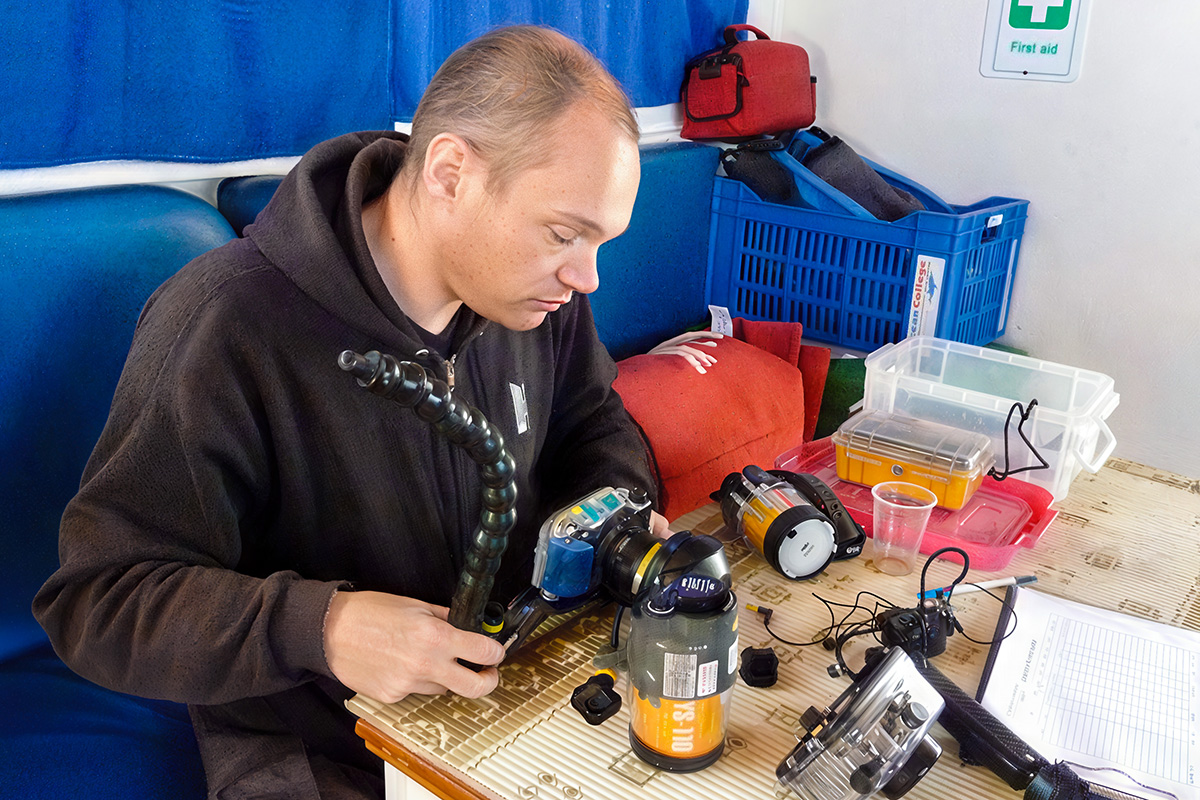
You might be surprised that the camera system I use underwater is far from cutting edge. It's not mirrorless, doesn't shoot fancy 8K video and doesn't even use a full frame sensor. It's actually a Nikon D7200, a 10 year old DSLR which is relatively humble compared to more recent cameras. It's shot more than its fair share of magazine covers over the years and images I've captured with it are still being picked up by magazines and commercial clients so it can't be that bad!

Will I switch to mirrorless one day? Of course - it's the future. I already own a Nikon Z8 which I use for topside video - I just need a kind-hearted soul to buy me a housing for it!

Q. What have been my best and worst diving experiences?
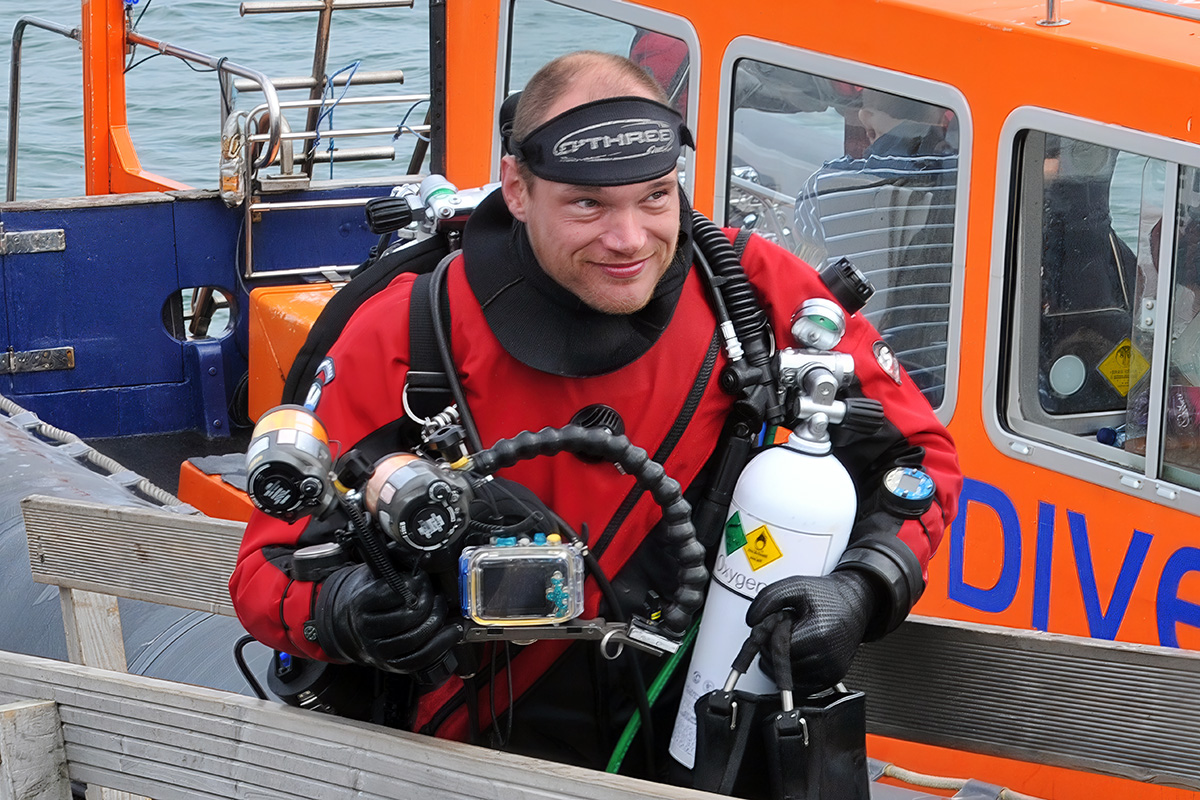
Not sure I have a specific 'worst' diving experience as any day out at sea beats a day in the office, right? I guess any day where rough seas are a feature of the transit to the dive site isn't great - I've certainly found that, as I've got older, my stomach is far less tolerant of rough seas than it used to be! Feeling a bit woozy before the dive is never fun, especially when diving with multiple stage cylinders and a rebreather.

Trying to put my finger on one single 'best' diving experience isn't easy either as there have just been so many moments where I've taken a step back and just thought 'wow!'. Surfacing in a chamber deep inside a cave certainly has that effect - just knowing that you're just one of a tiny number of human beings ever to have witnessed that site. Likewise, encounters with wildlife can be pretty awe-inspiring! Be it sharks, a pod of dolphins or even a crocodile - they're all moments where you just have to pinch yourself to check it is real.
Q. What is it about wide angle photography that appeals?
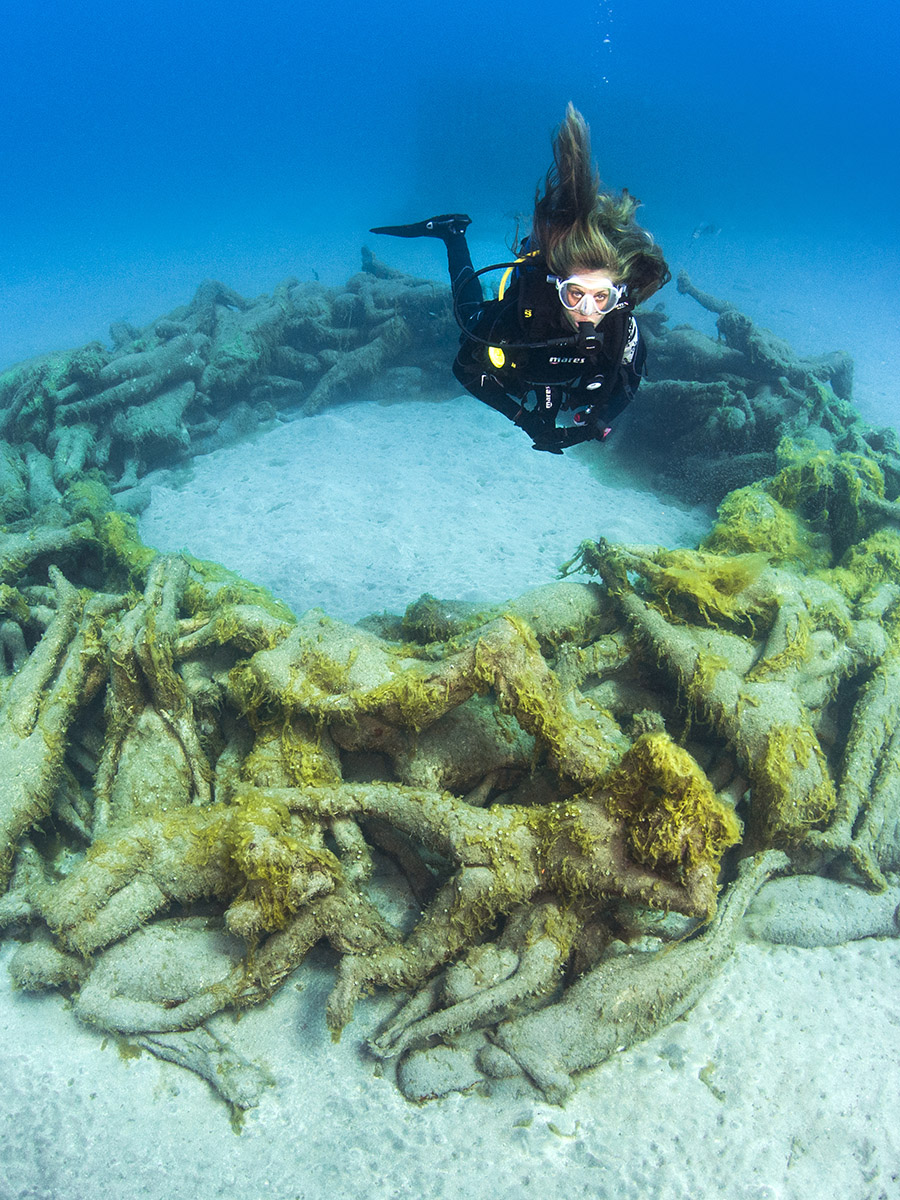
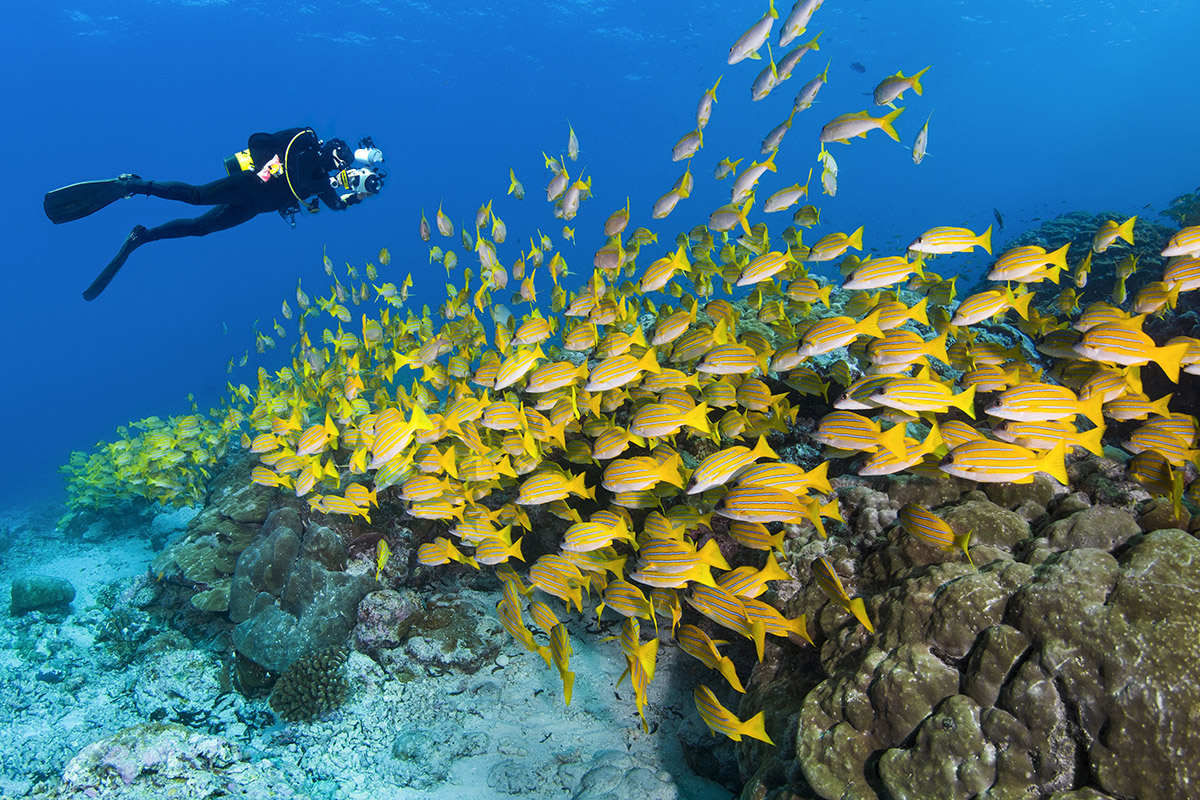
I guess underwater photographers generally fit into one of two categories - you're either fascinated by tiny stuff or really big stuff. For me, it's the big stuff that I've always wanted to capture through my photography. For me, I always want to include some sort of human connection in everything I shoot which is why most of my shots include at least one diver. Photography is story telling and including a diver just gives an image something that we naturally connect to on a human level. Divers also add a sense of scale which is particularly useful when you're shooting subjects in what is an alien environment for so many. Take an image of a shipwreck's prop, for example. How big is it? It's difficult to judge on its own but place a diver near it and we immediately understand its scale.

Shooting wide angle does have its challenges. Some would say that it's perhaps the trickiest style to get right underwater as it's very dependent on visibility. But on those days when the viz gods are smiling, there's nothing quite like a cool wide angle shot of a shipwreck to create a real sense of mystery and adventure. Again, it's all about telling a story and encouraging the viewer's imagination to run riot!

Q. What's my ultimate 'bucket list' dive?
If there's one shipwreck I'd love to dive, it's got to be the HMHS Britannic in the Kea channel off the coast of Greece. The sister ship of the Titanic, this huge liner struck a mine during World War One and sank in 120 metres of water. For technical divers, she's the pinnacle of wreck diving and is the one wreck that we all want to visit. A few of my diving friends have dived her and they all confirm that a dive on the Britannic does not disappoint. One day I'll get to dive her... I hope!
Q. What advice would I give a budding underwater photographer?
Don't try to run before you can walk. Consolidate your core skills before you take a camera underwater. Core skills like buoyancy control, propulsion and trim are the foundations of everything we do and that's particularly true when you take a camera in the water with you. I would recommend every underwater photographer signs up for something like GUE's Fundamentals course to really help nail those core skills, even if you have zero interest in becoming a techie.

If you can't hover within inches of your subject without making contact with the environment around you then you probably shouldn't be taking a camera in the water with you. Prioritise becoming the best diver you can.

Develop your in-water awareness too. Taking pictures is a task-focused activity but you need to be able to effectively monitor everything around you - know where your buddy is, know how much gas and 'no deco' time you have left and know how close you are to that fragile coral!

Q. What's my all-time favourite dive destination?
I love clear blue water as much as any diver but I honestly believe that the UK still offers some of the best diving you can find anywhere in the world. Centuries of trade, conflict and two world wars have given us a rich maritime history of shipwrecks just waiting to be explored. Scapa Flow certainly ranks as one of my favourite places to visit - the diving there is just world class! That said, I also enjoy simply snorkelling with my camera - you'll often find me snorkelling off Portland Bill with my camera during the Summer months!
"The sea, once it casts its spell, holds one in its net of wonder forever." - Jacques Yves Cousteau
This Life Aquatic...
Over the years I've been fortunate to travel to some amazing destinations, dive with some amazing folk and experience some amazing things. I am eternally grateful for the opportunities that have come my way. Throughout this journey, one thing has remained constant - my deep love for and enduring fascination with the underwater world. It is this obsession that drives me to take a camera underwater. As divers, we're incredibly fortunate to visit places that the vast majority of the world's population will ever get to experience. I've certainly had more than my fair share of underwater experiences that have made my just stop, step back and think 'Wow! How lucky am I?'.

As for the future, I don't have a crystal ball. I guess if I had to wish for anything, it would be 'more of the same, please' - more shipwrecks, more caves, more marine animal encounters. Simply more awesome underwater encounters. I still have a bucket list of destinations I'd like to visit with my camera - the Jardines de la Reina in Cuba springs to mind. Where else in the world can you snorkel with crocodiles? Talking of big animal encounters, I feel drawn to big fish too - more specifically, the Great White Shark. Sadly the world-famous Great Whites of Guadalupe Island remains off-limits to visitors so maybe a trip to South Africa or Australia is on the cards? It'll happen when finances and time allows...

There are plenty of places I'd like to revisit too - the beautiful caves of the Dordogne in France would certainly be near the top of that list. Whilst the caves of Mexico are far more ornate and the diving far more complex, there's something about France that appeals. Maybe it's the beautiful French countryside or maybe it's the wine and the glorious French cheeses? Where ever my diving takes me, you can be sure I'll take a camera with me...
All content © Jason Brown 2010-2026
No content may be reproduced without express written permission.